What Does 'Lay Low' Mean? the Ultimate Guide, Synonyms, and Usage Tips
 By Robert Thorne
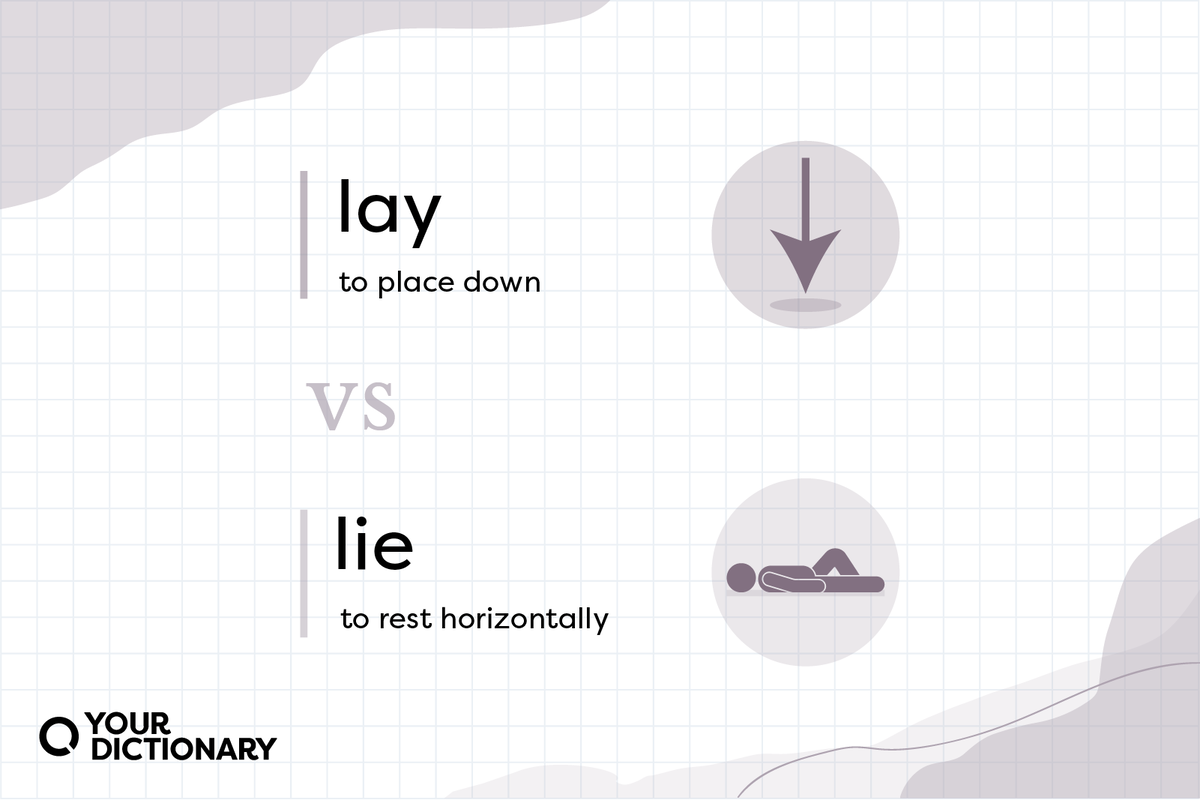
The friction between "lie low" and "lay low" stems directly from the distinction between transitive vs intransitive verbs. English grammar rules draw a sharp line between these two actions, even though casual speech continually blurs them.
The verb lie is intransitive. It describes an action the subject performs without acting upon an external direct object. You lie down on a couch; an animal lies in the tall grass. It signifies resting, reclining, or remaining in a specific state. Conversely, the verb lay is transitive. It requires a direct object: you lay a book on a table, or workers lay fresh asphalt. The subject acts upon something else.
Confusion deepens because of English's irregular past-tense conjugations. The past tense of the intransitive verb lie happens to be lay ("Yesterday, he lay hidden in the cellar"). Meanwhile, the past tense of the transitive verb lay is laid ("She laid the documents on the desk"). Because "lay" exists simultaneously as a present-tense transitive verb and a past-tense intransitive verb, spoken English merged them into a single, widespread shortcut.
Strict grammatical correctness dictates that if you are currently concealing yourself, you are lying low. If you tell a peer to avoid attention right now, textbook rules prescribe saying "lie low." However, lexicographers at Merriam-Webster and the Oxford English Dictionary acknowledge that "lay low" has become so entrenched across global English that treating it as an outright error in casual discourse ignores how living languages operate.
Robert Thorne covers electric vehicle innovations, autonomous driving systems, global mobility trends, and automotive engineering developments.
