The Global Cartel Crisis Erupts: How Mega-Events Unmasked Modern Cartel Territory Lines
 By Sophia Al-Mansoor
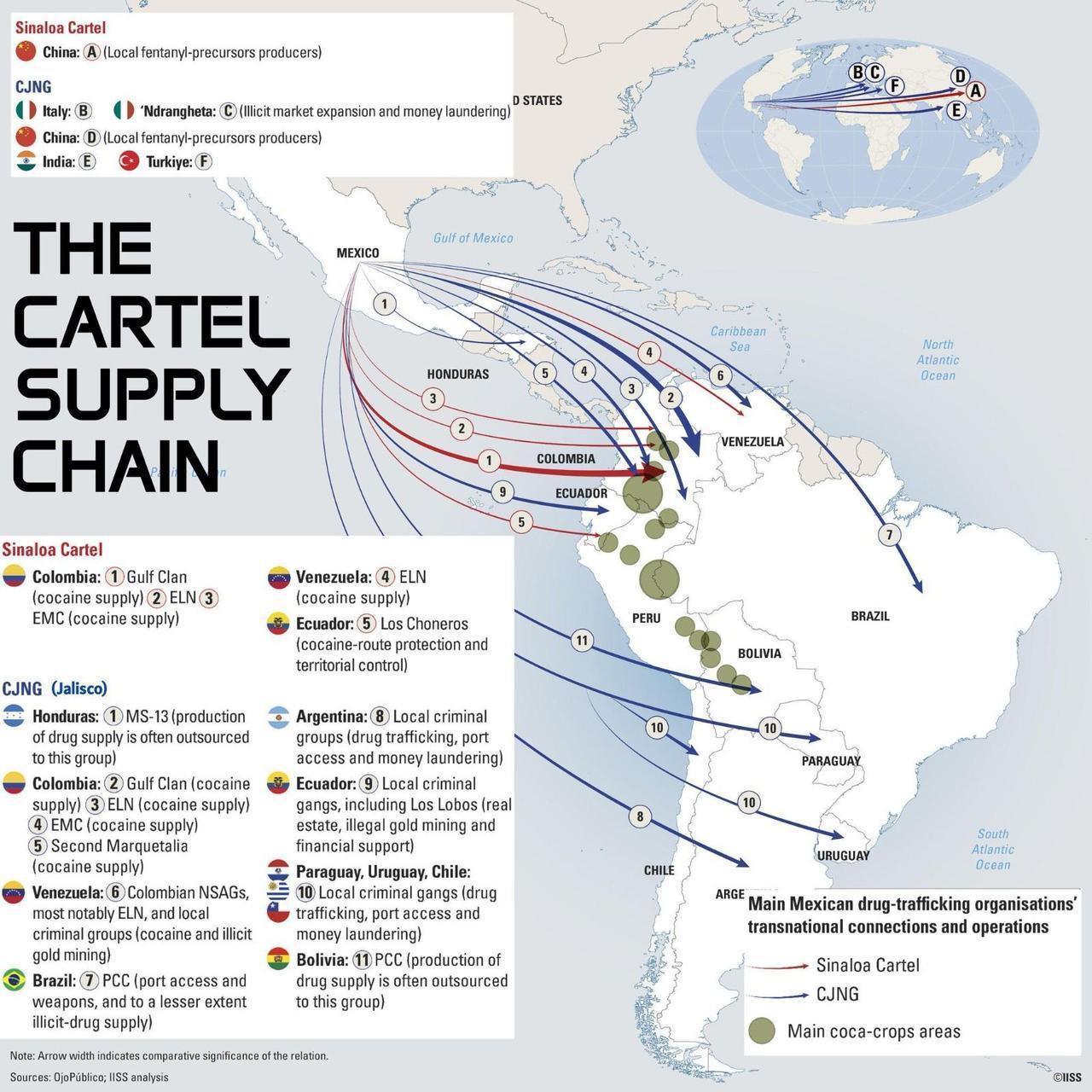
Modern cartels have moved far beyond agrarian drug production. The contemporary enterprise relies on distributed manufacturing and global financial integration.
Synthetic drug production highlights this evolution. Rather than growing crops, organizations like CJNG and the Sinaloa Cartel import industrial dual-use chemical precursors manufactured in East Asia. These chemicals flow through legitimate commercial shipping manifests into maritime hubs such as Manzanillo and Lázaro Cárdenas. Secret synthesis laboratories inside the mountains of Durango and Sinaloa process the raw chemicals into fentanyl and methamphetamine, which transit across the border using commercial trucking, underground tunnels, and light aircraft.
The financial infrastructure matches the physical supply chain in complexity. Money laundering operations have largely migrated away from basic cash deposits. Contemporary syndicates rely on Chinese underground banking systems (CUBS), mirror exchanges, trade-based money laundering, and high-frequency cryptocurrency transactions.
A syndicate moving illicit capital routinely purchases consumer electronics, construction supplies, or agricultural goods in Asia, ships them to retail distributors in Latin America, and recoups pristine local currency. By embedding capital into ordinary global trade, cartels minimize exposure to banking alerts, insulating their balance sheets against traditional law enforcement asset seizures.
Sophia analyzes international trade, startup ecosystems, retail transformation, and supply chain logistics for modern digital publications.
