How Big Is a Dime? Visual Size Guide, Millimeter Specs, and Everyday Comparisons
 By Maya Lin-Takahashi
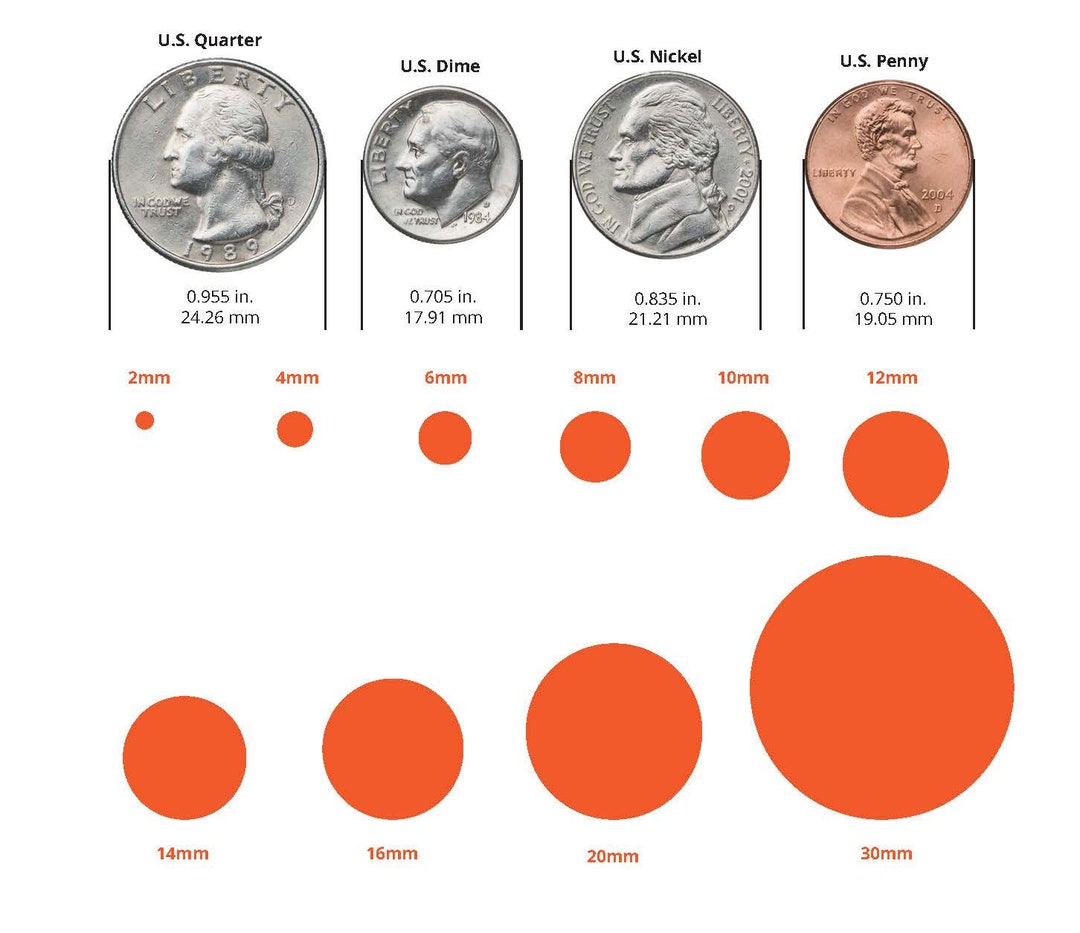
Newcomers to US currency often wonder why the dime sits below the one-cent piece in physical scale. The answer is rooted in history. When the Coinage Act of 1792 established American denominations, coin sizes correlated directly with the intrinsic value of precious metals. Because silver carried far greater value per ounce than copper, a silver ten-cent piece had to be significantly smaller than a pure copper cent. When the United States removed silver from circulating dimes and quarters via the Coinage Act of 1965, the Mint preserved the historical physical footprints so vending machines and mechanical coin sorters would not require nationwide overhauls.
As a result, the dime vs penny size comparison produces a counterintuitive outcome: the one-cent coin exceeds the ten-cent coin in diameter, thickness, and total mass.
| Denomination | Diameter (mm / inches) | Thickness (mm / inches) | Weight (grams) |
|---|---|---|---|
| Dime (10¢) | 17.91 mm / 0.705 in | 1.35 mm / 0.053 in | 2.268 g |
| Penny (1¢) | 19.05 mm / 0.750 in | 1.52 mm / 0.060 in | 2.500 g |
| Nickel (5¢) | 21.21 mm / 0.835 in | 1.95 mm / 0.077 in | 5.000 g |
| Quarter (25¢) | 24.26 mm / 0.955 in | 1.75 mm / 0.069 in | 5.670 g |
A penny spans 19.05 mm, making it 1.14 mm wider than the dime. The nickel dwarfs both, coming in at 21.21 mm across and more than double the dime's mass. The quarter measures 24.26 mm, making the dime roughly 74% the width of a standard twenty-five-cent piece.
Maya is a hardware enthusiast who tests and reviews smart home devices, smartphones, wearables, and audio gear. She focuses on practical consumer value and build quality.
