From Pigment Studies to 'Eyemaxxing': the Rising Fascination with Warm Eye Shades
 By Elena Rostova
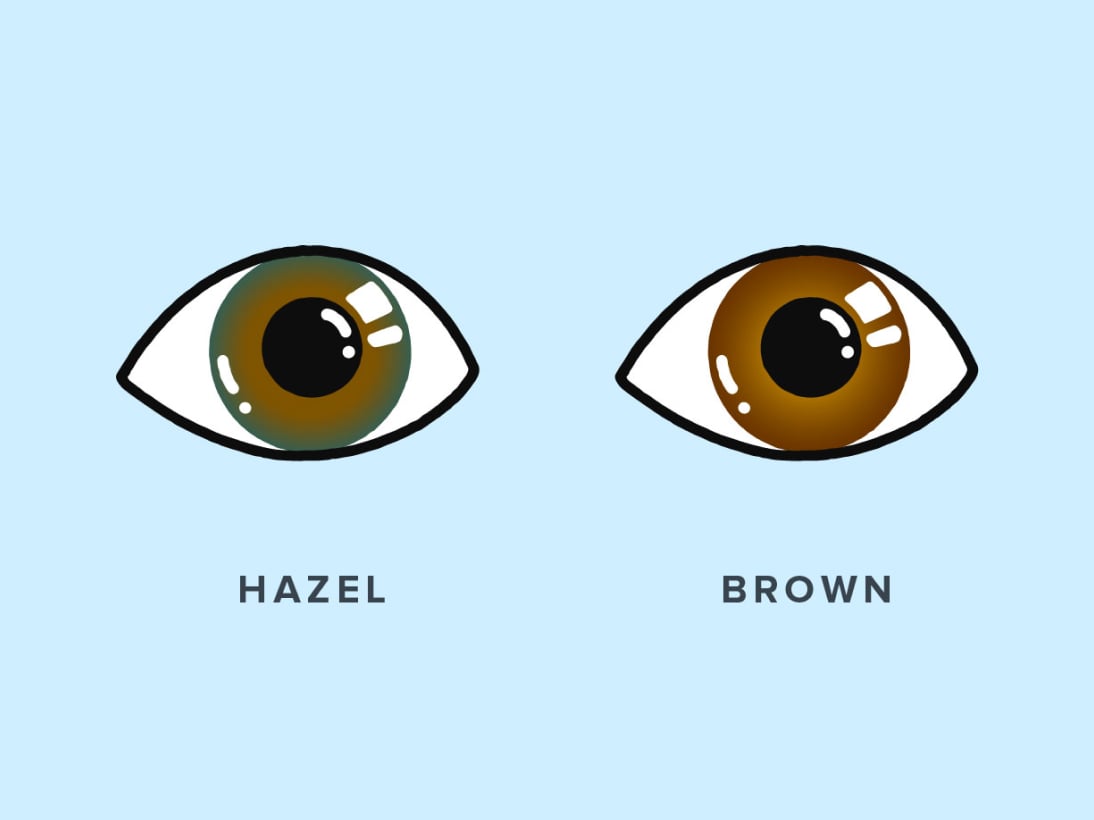
The human iris does not contain green, hazel, or blue liquid pigment. The entire chromatic spectrum visible in human eyes relies on a single biological compound: melanin, specifically eumelanin. How that pigment sits inside the iris determines whether an eye appears deep mahogany, amber, or shifting olive.
In deep brown eyes, a dense melanin concentration coats both the anterior border layer and the stroma. This pigment layer absorbs nearly all incoming light wavelengths, reflecting back rich, uniform brown tones. The biological architecture of hazel eyes is more complex. Hazel irises feature moderate pigment dispersion across the anterior layer, leaving the underlying stroma relatively sparse.
When sunlight strikes a hazel eye, the short wavelengths of light encounter the sparse cellular particles in the stroma and scatter, a physical principle known as Rayleigh scattering, the same atmospheric effect that makes the sky appear blue. This scattered blue light blends with the physical yellowish-brown eumelanin sitting in the anterior layer. The visual consequence is an optical illusion: an eye that looks predominantly green in indirect morning light, gold at midday, and warm chestnut under evening halogen bulbs. Far from being a static color, hazel is an active physical interaction between light physics and cellular matter.
Elena Rostova holds a Master's degree in Public Health Journalism. She covers groundbreaking medical research, holistic wellness trends, mental health awareness, and nutritional science.
