What Those Numbers Mean at the Dentist: Why Your Mouth Is Mapped 1 to 32
 By Robert Thorne
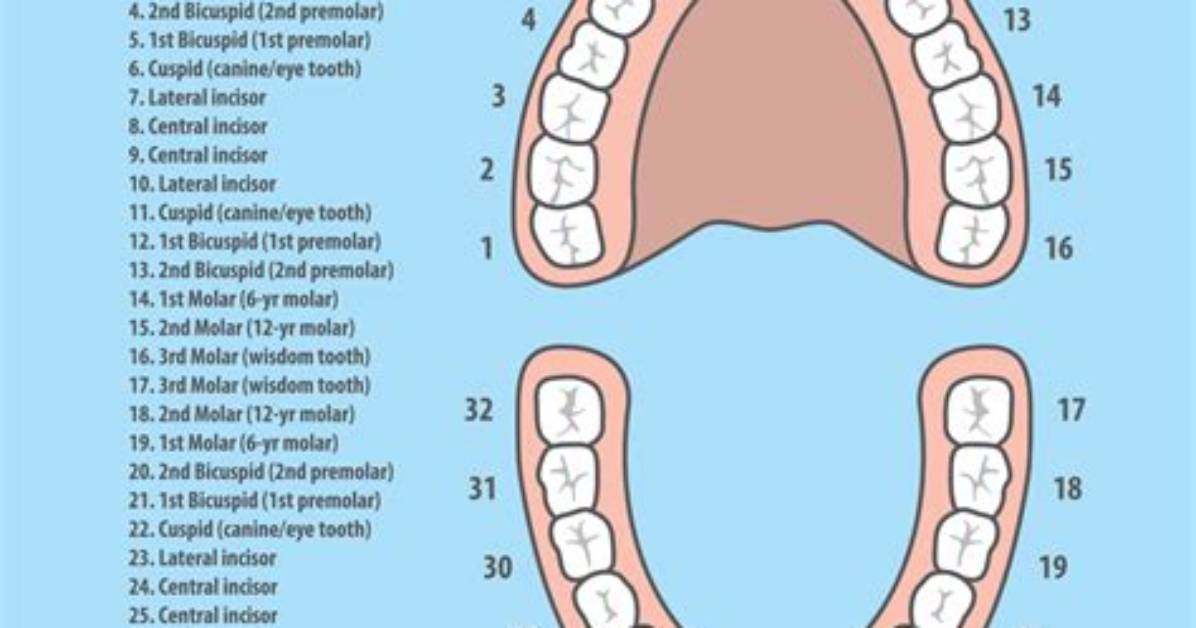
Patients often assume that when a hygienist rattles off numbers like "four, five, four," their teeth are deteriorating rapidly. In reality, those spoken triplets represent periodontal pocket depth rather than tooth numbers. Using a millimeter-calibrated probe, the clinician measures the crevice between your tooth surface and the surrounding gingival tissue at six distinct points: three on the cheek side (facial) and three on the tongue side (lingual).
Measurements of 1 to 3 millimeters indicate firm, healthy tissue hugging the enamel. A reading of 4 millimeters points to mild inflammation or gingivitis, signaling that bacterial plaque has created shallow separation. Once readings hit 5 millimeters or higher, clinicians look for active periodontitis, where bacterial colonies dissolve the underlying periodontal ligament and alveolar bone. A sudden call of "six on the distal of nineteen" informs the dentist that the back corner of your lower-left first molar faces significant structural bone recession requiring targeted scaling or surgical therapy.
Robert Thorne covers electric vehicle innovations, autonomous driving systems, global mobility trends, and automotive engineering developments.
