From 1984 Sun Microsystems to Modern Cloud: the Complete Nfs Timeline
 By David Miller
By the late 1990s, the stateless model was obsolete. Internet firewalls blocked the sprawling cluster of auxiliary ports demanded by NFSv3 mount daemons, lock managers, and RPC portmappers. In response, Sun Microsystems handed control of the specification to the Internet Engineering Task Force (IETF), yielding the NFSv4 protocol in RFC 3010 and RFC 3530.
The standard changed fundamentally. NFSv4 became an explicitly stateful file-sharing protocol. It eliminated secondary daemons, routing all control communication, locking mechanisms, and data transfers through a single well-known port: TCP 2049. This simple consolidation made enterprise firewall traversal straightforward.
NFSv4 also tackled latency over wide-area links. In NFSv3, opening a file, checking permissions, reading bytes, and closing the handle required four separate network round trips. NFSv4 introduced compound RPC requests, packaging directory traversal, permission verification, and read operations into a single network transmission packet. Security modernized alongside it. NFSv4 discarded simple, easily spoofed Unix user identifier (UID) passing, integrating mandatory cryptographic authentication through Kerberos and access control lists (ACLs) compatible with both Windows and Unix permissions.
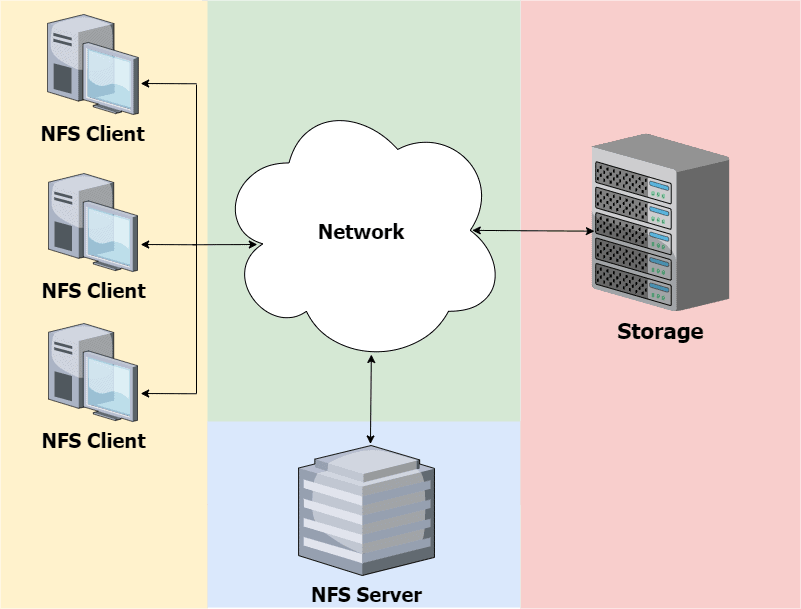
Later revisions transformed capacity scaling. NFSv4.1 introduced Parallel NFS (pNFS), which separated the metadata path from the data path. Instead of forcing all I/O traffic through a single bottlenecked storage head, clients query a central metadata server for data layouts, then stream raw data stripes directly across dozens of discrete storage target servers simultaneously.
David Miller brings 15 years of experience in global economics, personal finance strategy, and market dynamics. He specializes in turning complex economic trends into actionable insights for everyday readers.
