What Does Hell Really Look Like? Why Everything Pop Culture Told You Is Wrong
 By Alexander Ross
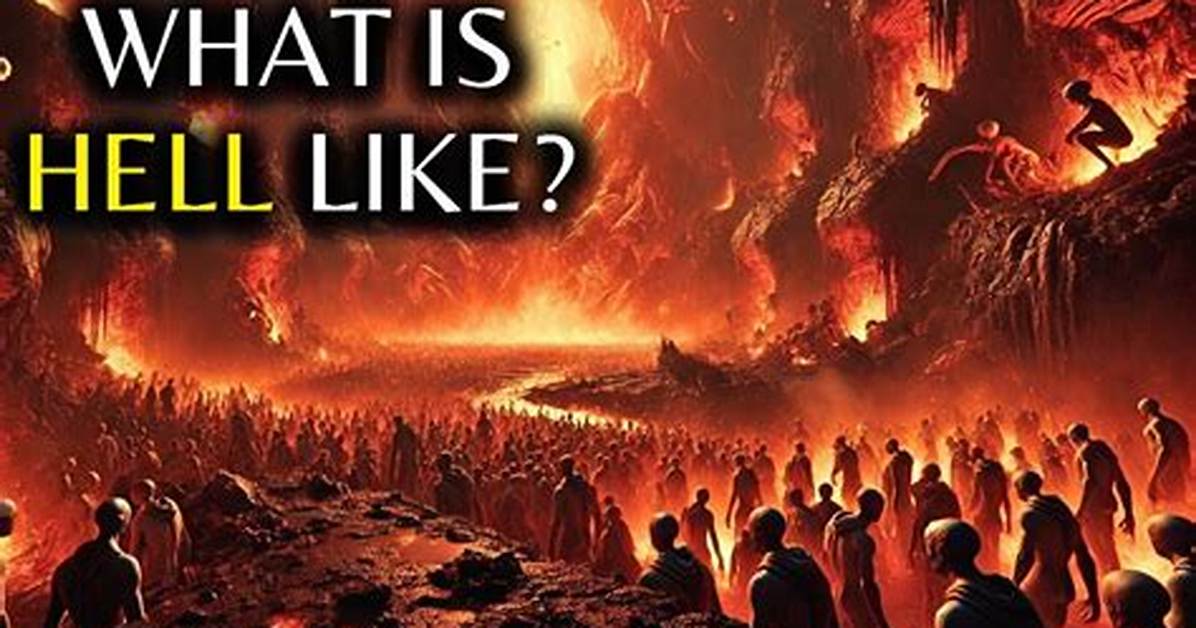
In modern theological scholarship, the debate over eternal retribution has splintered into three distinct frameworks. Traditionalists maintain the model of Eternal Conscious Torment (ECT), arguing that divine holiness necessitates an endless, conscious retribution for sin, though many contemporary conservative scholars interpret the fire and darkness as poetic figures signifying the absolute loss of God's presence rather than physical combustion.
A second camp, championing conditional immortality or annihilationism, points to the original biblical idioms of consumption, decay, and fire destroying whatever falls into it. In this view, Gehenna is an execution chamber rather than a preservation chamber; the wicked cease to exist entirely rather than suffering infinite misery for finite sins. A third camp, Christian universalism, asserts that judgment fires function purgatively, refining characters until reconciliation is achieved.
Mid-20th-century Christian apologist C.S. Lewis offered one of the most culturally resonant visual descriptions in his 1945 novella The Great Divorce. Lewis abandoned brimstone entirely, rendering hell as an endless, drizzling, gray industrial town. Residents constantly quarrel with their neighbors, abandon their flats, and move millions of miles further out into the infinite suburbs to avoid human contact. In Lewis's framing, hell is not a locked dungeon presided over by demonic guards, but an empty, self-imposed isolation where the doors are locked from the inside.
Alexander Ross has covered the video game industry for a decade, writing deep dives on game design, esports tournaments, VR developments, and gaming culture.
