Complete Guide to Rales Breath Sounds: Causes, Symptoms, and Care
 By Elena Rostova
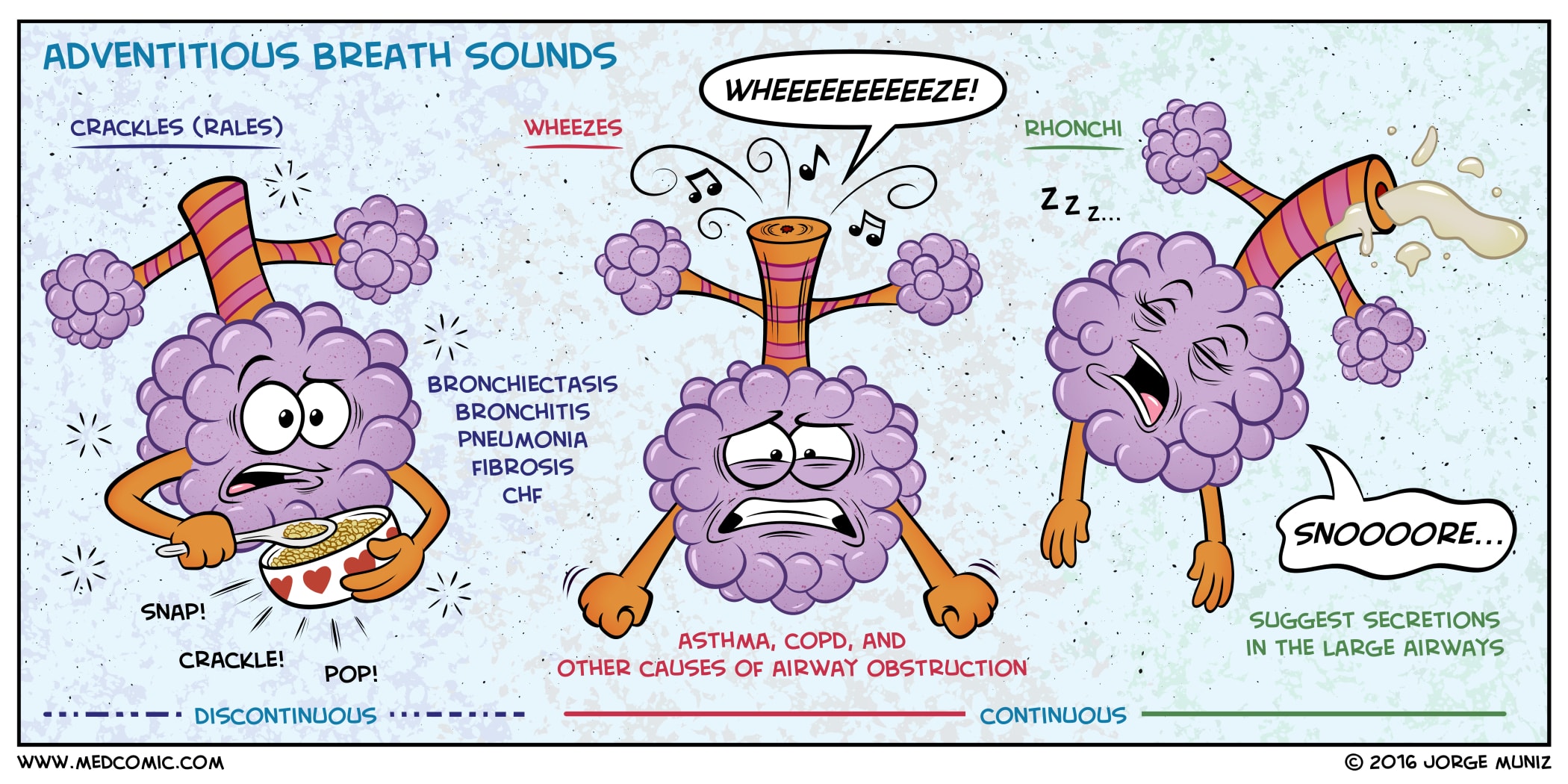
Rales are discontinuous, non-musical adventitious breath sounds. For decades, medical dogma held that rales were purely the auditory friction of air moving through secretions. High-speed acoustic analysis paints a different picture.
Fine crackles are micro-explosions. When alveoli and tiny terminal bronchioles collapse due to elevated surface tension, interstitial fluid, or fibrotic stiffening, they seal shut during exhalation. As inspiration generates sufficient negative intrathoracic pressure, these small conduits snap open abruptly. That sudden equalization of gas pressure vibrates the surrounding parenchyma, producing a series of brief, high-frequency acoustic spikes. These sounds last roughly 5 milliseconds and mimic salt dropped onto a hot frying pan or hair rolled between two fingers close to the ear.
Coarse rales operate on a fluid-displacement principle. When inflammatory exudate, transudate, or mucus pools inside segmental bronchi and larger bronchioles, incoming air boluses physically rupture through the liquid barriers. These interruptions yield lower-pitched, louder, and longer-lasting sounds, averaging 15 milliseconds in duration. They produce a bubbling, gurgling quality often audible across both inspiration and expiration.
Elena Rostova holds a Master's degree in Public Health Journalism. She covers groundbreaking medical research, holistic wellness trends, mental health awareness, and nutritional science.
