The Ghost Territories: Why the Us Minor Outlying Islands Exist and Why Almost Nobody Lives There
 By Robert Thorne
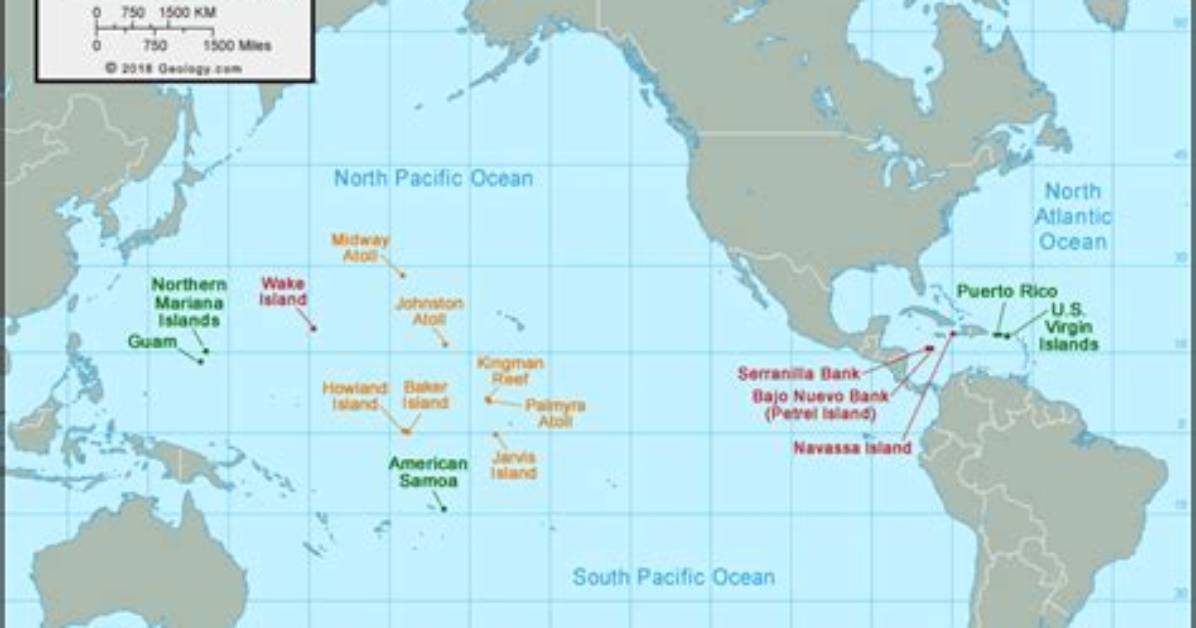
Despite their isolation, two of these territories face persistent geopolitical friction. In the Caribbean, Haiti has claimed sovereignty over Navassa Island since the nineteenth century, citing its historical 1801 constitution. Haitian fishermen occasionally sail into Navassa's waters despite US Coast Guard patrols, pointing to the territory as an unhealed colonial grievance. In the western Pacific, the Republic of the Marshall Islands maintains an official cultural and historic claim to Wake Island, known natively as EnenKio.
Beyond territorial disputes, the islands hold immense value in maritime geography. Under the United Nations Convention on the Law of the Sea, sovereign landmasses generate an Exclusive Economic Zone (EEZ) extending 200 nautical miles outward. Because the United States holds these nine dots, it controls roughly 2 million square kilometers of ocean space across the central Pacific and Caribbean. That immense maritime footprint blocks foreign commercial exploitation, controls seabed mineral exploration, and secures vast transit corridors across the Indo-Pacific.
Robert Thorne covers electric vehicle innovations, autonomous driving systems, global mobility trends, and automotive engineering developments.
