Why Translating 'These' in Spanish Trips up Even Advanced Learners
 By Robert Thorne
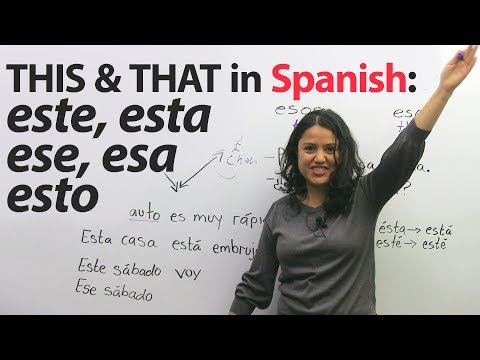
Q1: Why does Spanish say "este" in the singular but "estos" instead of "estes" in the plural?
A1: The asymmetry stems from the historical evolution of Vulgar Latin into early Ibero-Romance. The Latin demonstrative iste evolved into Spanish este, while the plural Latin accusative forms converged on the -os ending, yielding estos. The form estes simply does not exist in standard Spanish grammar.
Q2: When should I choose "estos" versus "esos"?
A2: Use estos (or feminine estas) when the objects are within your physical reach or immediate vicinity. Use esos (or feminine esas) when the objects are closer to the person you are speaking to, or slightly removed from both of you in space or time.
Q3: Can "esto" ever be used to say "these"?
A3: No. Esto is exclusively singular and neutral. It never carries plural meaning and never modifies a noun directly. To say "these," you must identify the grammatical gender of the noun and choose either estos (masculine) or estas (feminine).
Robert Thorne covers electric vehicle innovations, autonomous driving systems, global mobility trends, and automotive engineering developments.
