Why Does the 'Flower of Death' Smell Like Rotting Flesh? Inside the Viral Phenomenon
 By Elena Rostova
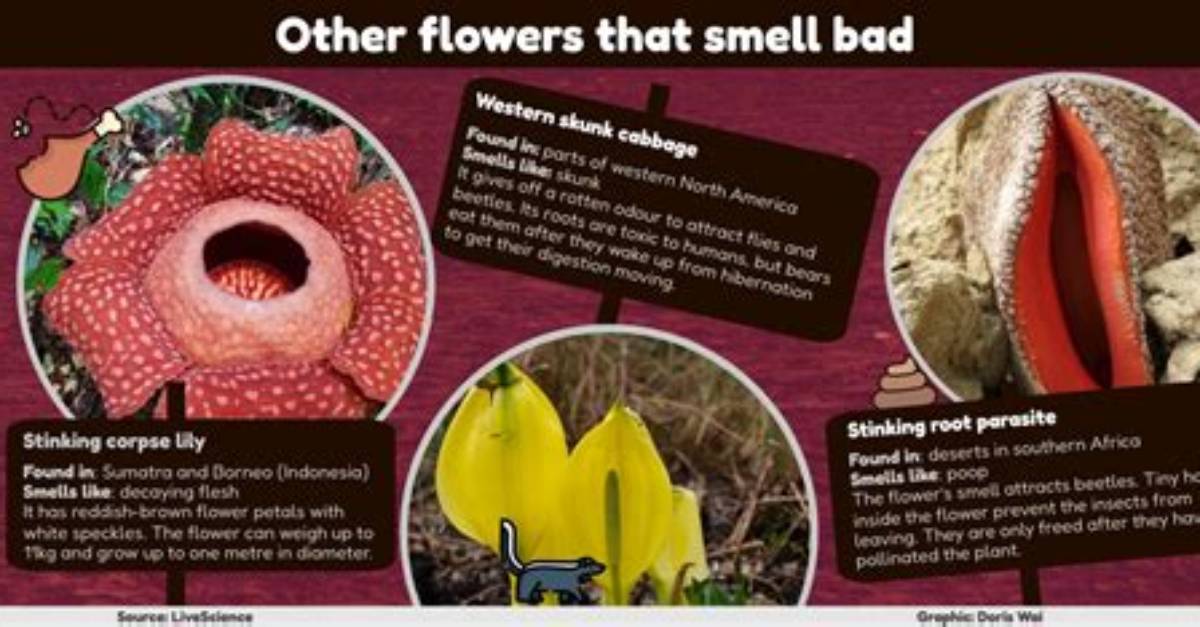
The overwhelming odor of the titan arum is not a byproduct of decay; it is an active, biochemically engineered optical and olfactory illusion. Gas chromatography tests reveal that the plant synthesizes a volatile blend of organic sulfur compounds and amines designed to target the sensory organs of scavenger insects.
The primary culprit behind the sharp, rotting-cabbage smell is dimethyl trisulfide (DMTS), reinforced by dimethyl disulfide (DMDS). Working alongside these sulfurous emissions is trimethylamine, the chemical compound responsible for the smell of rotting fish, as well as isovaleric acid, which produces the pungent, rancid tang associated with sour sweat and unwashed socks.
Trace amounts of putrescine and cadaverine, the very diamines produced during the tissue decomposition of animal corpses, provide an unmistakable undertone of actual death. Together, these compounds overpower human olfactory receptors. To a carrion beetle navigating the dense canopy of an equatorial jungle, however, this chemical cloud smells like an ideal nursery.
| Compound | Olfactory Profile | Ecological Function |
|---|---|---|
| Dimethyl trisulfide | Rotting vegetables, sulfur, sharp decay | Long-range signal for carrion flies |
| Dimethyl disulfide | Cooked cabbage, garlic-like pungency | Diffuses mid-distance bait markers |
| Trimethylamine | Ammonia-like, spoiled marine life | Triggers carnivorous scavenger instincts |
| Isovaleric acid | Stale sweat, pungent cheese | Replicates mammal presence and bacterial activity |
| Benzyl alcohol | Faintly sweet, floral edge | Lures flying insects into the deep spathe interior |
Elena Rostova holds a Master's degree in Public Health Journalism. She covers groundbreaking medical research, holistic wellness trends, mental health awareness, and nutritional science.
