Why Bite-Sized Humor Is Dominating Social Feeds: the Science of Instant One-Liners
 By Sophia Al-Mansoor
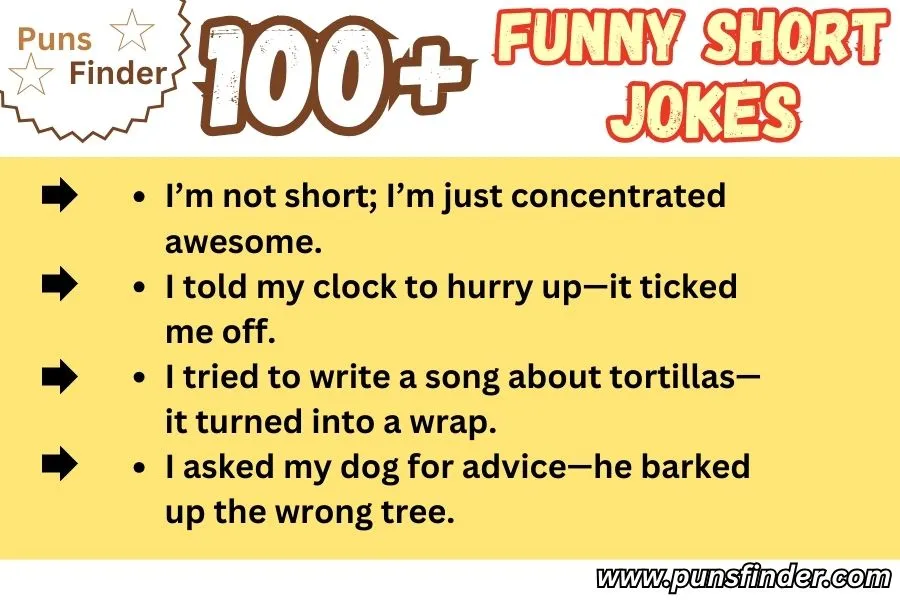
Laughter is an evolutionary shock absorber. Cognitive relief theory, first outlined by Immanuel Kant and later expanded by Sigmund Freud, suggests that humor occurs when our mental apparatus braces for one outcome but encounters another completely benign resolution. In long-form stand-up comedy pacing, a performer spends three minutes building narrative pressure before providing relief. Short funny jokes perform that exact sequence in a fraction of the time.
The brain operates as an aggressive pattern-recognition engine. When a reader processes the premise of a clever one-liner, neural networks pre-activate anticipated linguistic pathways. A joke like, "I told my doctor that I broke my arm in two places. He told me to stop going to those places," works because the brain interprets "places" as anatomical coordinates. The punchline suddenly pivots the semantic frame to geographic locations. That momentary computational error creates a flash of tension, followed immediately by cognitive relief when the pun clicks.
This neurological release triggers a burst of dopamine. Because the resolution takes less than 600 milliseconds to register, the reward mechanism is nearly instantaneous. On mobile feeds, this efficiency creates compulsive loops. Viewers consume dozens of punchy jokes in a single sitting because the cognitive investment is minimal while the neurochemical payoff arrives without delay.
Sophia analyzes international trade, startup ecosystems, retail transformation, and supply chain logistics for modern digital publications.
