Who Was Eris? Unraveling the True Origin of Discord in Greek Myth
 By Maya Lin-Takahashi
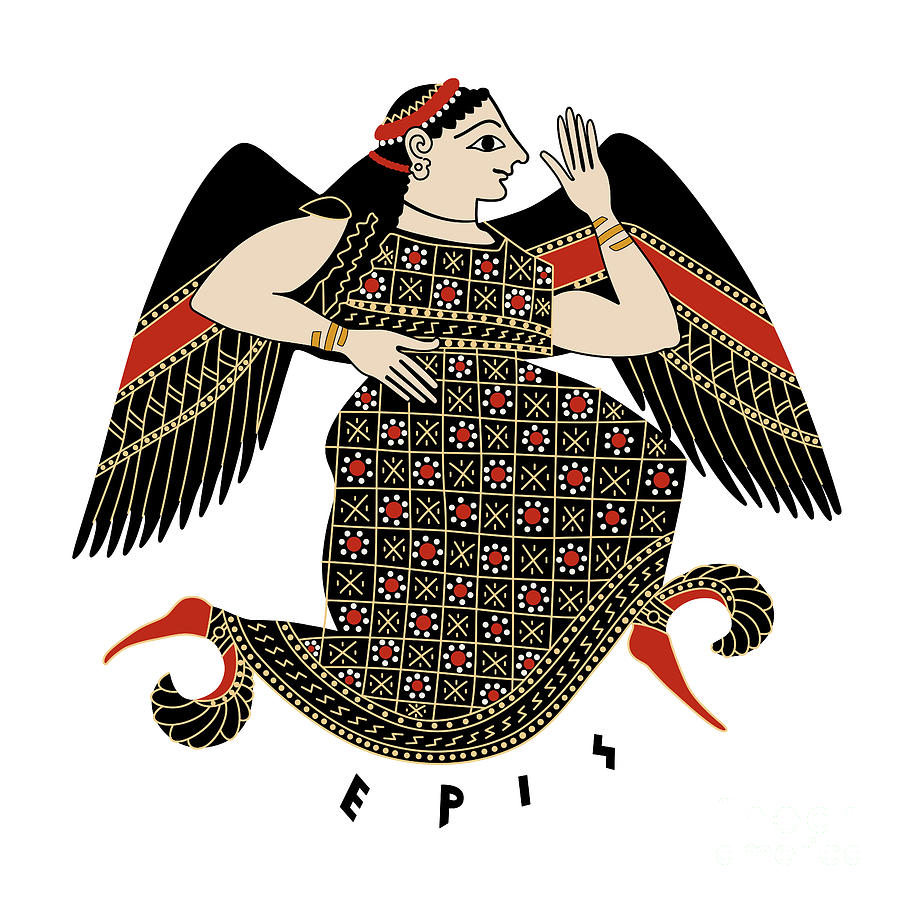
Classical Greeks did not build grand marble sanctuaries to Eris. They did not carve civic altars to celebrate her arrival. Instead, ancient communities acknowledged her with quiet dread. Unlike Athena or Apollo, who mediated their divinity through civic contracts, Eris represented friction that resisted mediation.
To Homer, writing in the 8th century BCE, she is a battlefield reality. In Book IV of the Iliad, Homer describes her transformation during clashes between Greeks and Trojans: small at first when she sets her feet on the earth, her head soon crashes against the heavens. She walks among warrior ranks, trampling the dead and gleefully stoking mutual hatred. She is neither neutral nor indifferent. She feeds on slaughter, amplifying ordinary grievances into bloodbaths.
Her place in the wider pantheon was deeply uncomfortable. The Olympians could not eradicate her because conflict was fundamental to the universe. Hesiod made this clear in Works and Days, offering a sophisticated moral distinction: mankind lives alongside two different types of strife. The first brings cruel war, civil division, and sorrow. The second, buried deep within the earth by Zeus, stirs dormant men to work. It forces a lazy neighbor to see his peer building wealth, driving him to plow his fields and match the effort. Strife was destructive, yet it also underpinned human civilization.
Maya is a hardware enthusiast who tests and reviews smart home devices, smartphones, wearables, and audio gear. She focuses on practical consumer value and build quality.
