Timeline of a Lip Blemish: Day-by-Day Stages from Early Itch to Clear Skin
 By Chloe Bennett
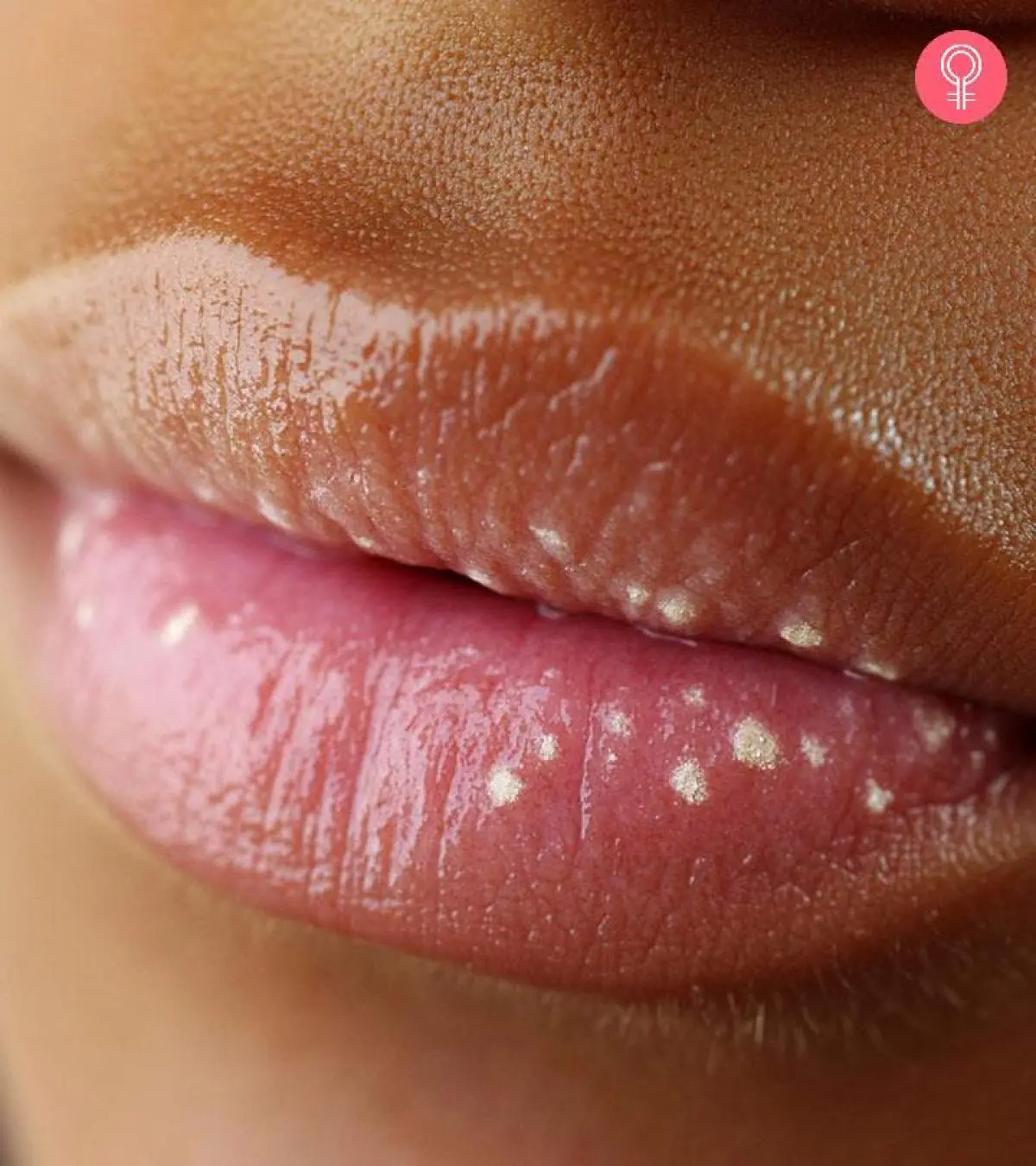
The mouth occupies a unique dermatological threshold. The vermilion border marks the boundary where keratinized facial skin transitions into the non-keratinized stratified squamous epithelium of the oral mucosa. Normal facial skin contains hair follicles and standard sebaceous units that produce protective sebum. The vermilion zone itself contains no hair follicles and minimal sweat glands.
Because of this anatomical boundary, true closed comedones only appear right on the outer margin of the vermilion border where hair follicles still exist. When dead keratinocytes fuse with excess sebum, they form an impaction under the skin surface. This blockage presents as a firm, non-tender white elevation.
When people observe tiny, pinpoint pale yellow or off-white dots scattered directly across the vermilion surface, they are rarely looking at acne. Instead, these are usually Fordyce spots, enlarged, ectopic clogged sebaceous glands lacking follicular openings. Research indicates that up to 80% of adults have visible Fordyce spots. They represent normal anatomical variation rather than infectious pathology, meaning attempting to extract them causes pain, bleeding, and potential scar tissue without changing their presence.
Chloe Bennett explores the intersection of pop culture, streaming entertainment, digital trends, and contemporary lifestyle. Her weekly commentary reaches thousands of culture enthusiasts.
