The Ultimate Purple Mixing Masterclass: Pigment Formulas, Ratios, and Faqs
 By Alexander Ross
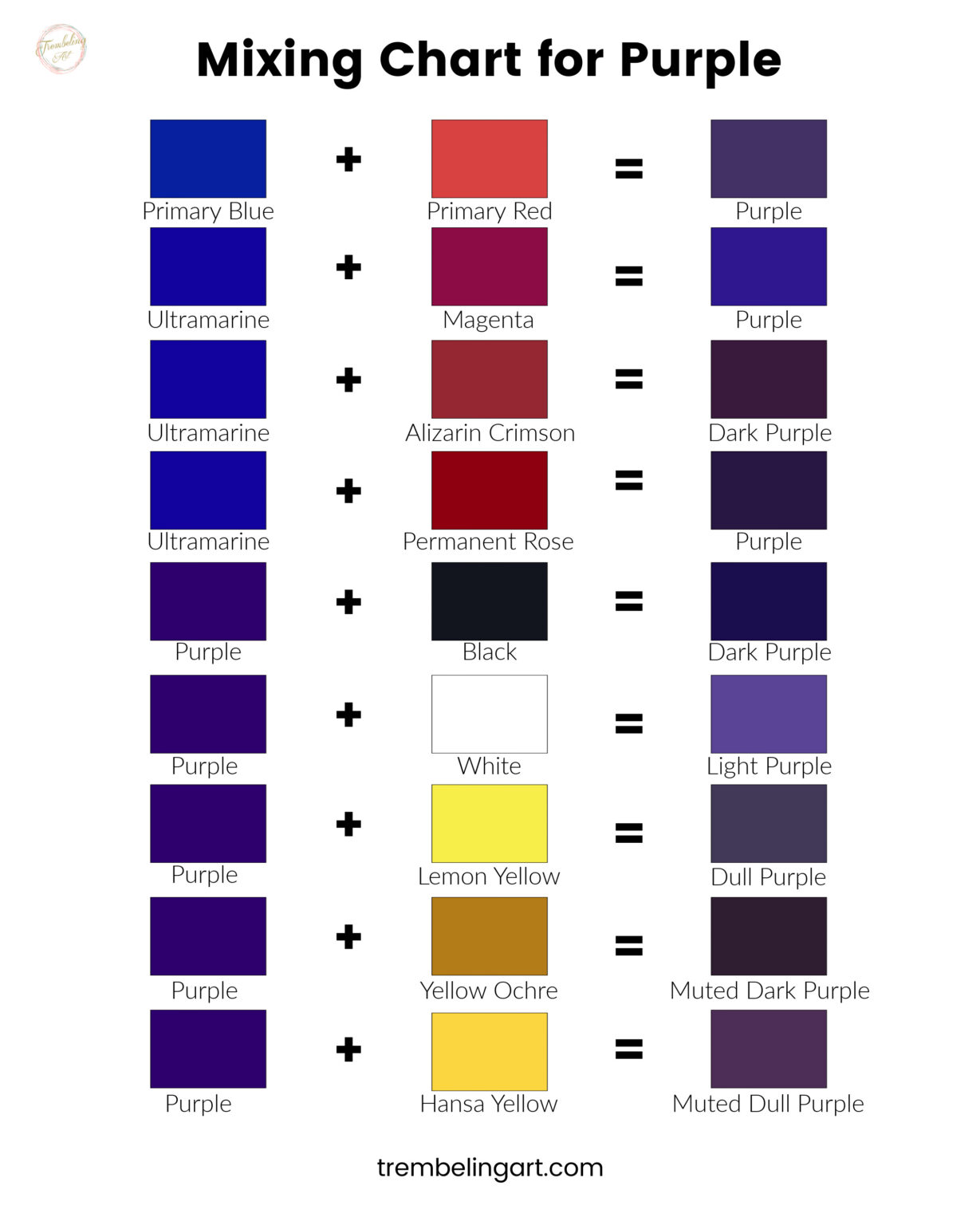
Vibrant secondary colors require specific single-pigment paints rather than pre-mixed student formulations. Professional artists rely on distinct formulas to generate predictable, highly saturated purples across the tonal spectrum.
For the most brilliant, clean violet, combine Quinacridone Magenta (PR122) with Ultramarine Blue (PB29). Quinacridone Magenta is a cool red that sits near the violet threshold on the secondary color wheel. Ultramarine Blue is naturally warm and reddish, containing red undertones rather than yellow or green. When these two pigments meet, their light-absorption profiles align without third-color interference. A baseline ratio of 3 parts Quinacridone Magenta to 1 part Ultramarine Blue creates a balanced royal purple. Adjusting the ratio to 4:1 produces rich magenta-violet, while reversing it to 1:2 yields an intense, deep indigo.
For deep, moody, jewel-toned plums, swap Ultramarine Blue for Phthalo Blue (Red Shade, PB15:6) paired with Alizarin Crimson (PR83) or Dioxazine Violet (PV23). Phthalo pigments possess immense tinting strength; adding a pinhead amount instantly overtakes weaker reds. Proceed cautiously by mixing red into blue in micro-increments rather than pouring blue directly into your red base.
Alexander Ross has covered the video game industry for a decade, writing deep dives on game design, esports tournaments, VR developments, and gaming culture.
