The Truth Behind Classroom Unblocked Games: Malware Risks and Proxy Security Myths
 By Elena Rostova
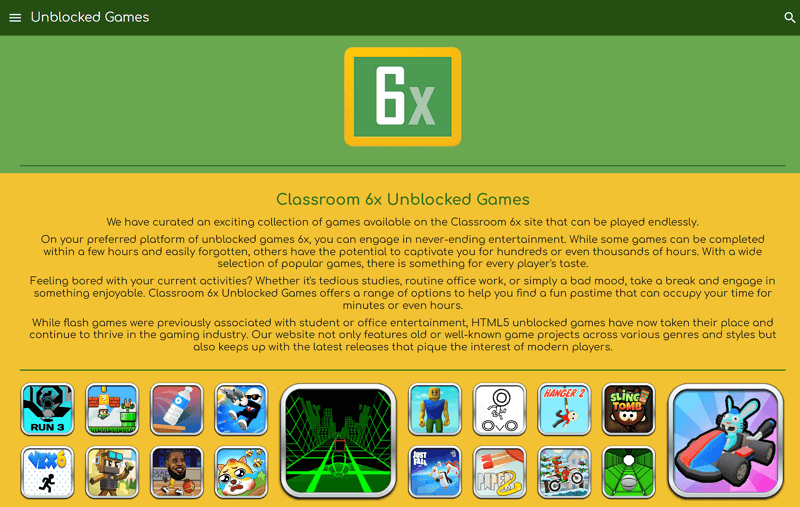
The demand for gaming during class hours is as old as computer labs themselves. When Adobe Flash collapsed in December 2020, observers assumed the golden era of classroom gaming had closed. Instead, software developers migrated classic Flash libraries directly into lightweight, browser-based HTML5 games. This transition completely changed the security equation. HTML5 games run natively inside the browser execution context without external plugins, consuming minimal memory while blending seamlessly with legitimate network traffic.
Aggregators quickly industrialized this shift. Hubs like Unblocked Games 76 cataloged thousands of titles, packaging them into lightweight platforms that could be stood up on fresh domains in minutes. Whenever a school district flags and blocks a URL, automated scripts deploy clone repositories to alternative top-level domains. Students share these fresh URLs on Reddit, Discord, and shared Google Docs long before web filters update their threat signatures.
Google Sites games represent the most difficult variant of this trend. Because Google Workspace is foundational to thousands of school systems, IT departments whitelist domains like sites.google.com by default. Students exploit this blind spot by building customized gaming frontends directly on Google-hosted infrastructure. When a child opens an unblocked game on a Google-hosted URL, standard edge firewalls view the connection as benign school activity.
Elena Rostova holds a Master's degree in Public Health Journalism. She covers groundbreaking medical research, holistic wellness trends, mental health awareness, and nutritional science.
