The Tech Flaw: Why School Firewalls Cannot Easily Block 'Google Classroom' Game Hubs
 By Chloe Bennett
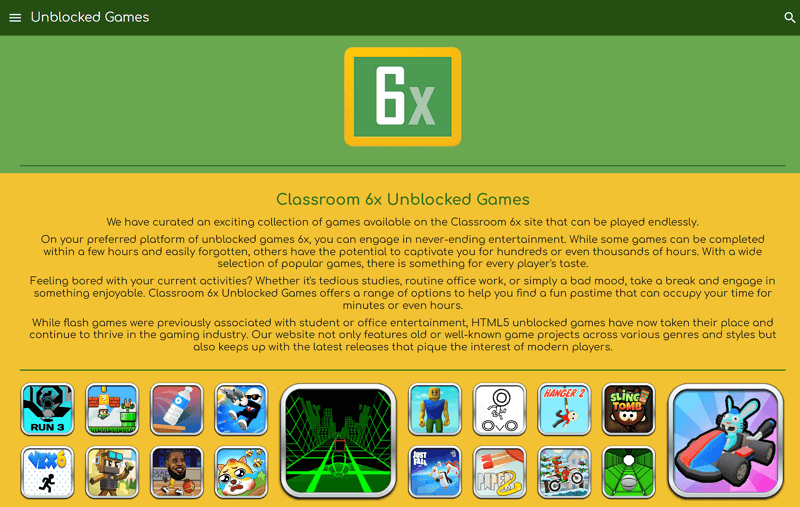
The underlying technology driving these hubs is the standard HTML `<iframe>` element paired with client-side script execution. Students launch free sites on Google Sites and embed raw JavaScript game engines, Canvas elements, or external CDN mirrors.
html
<!-- Simplified structural layout of an embedded classroom game runner -->
<iframe
src="https://cdn.jsdelivr.net/gh/[repository]/game-payload/index.html"
style="border:0; width:100%; height:100%;"
allow="gamepad; autoplay; fullscreen">
While commercial web filters maintain blacklists of traditional gaming directories like Coolmath Games or primary hubs like Unblocked Games 76, students frequently swap the back-end host of their iframes to code repositories hosted on GitHub Pages, Replit, or Vercel.
More advanced iterations avoid remote asset calls entirely. Creators convert complete game packages, graphics, audio, and logic engines, into single-file HTML documents using base64 encoding. A student uploads this self-contained package to Google Drive, sets file permissions to public, and displays it via the native Drive preview player. The browser decodes the data URI client-side. The network filter records a standard 2-megabyte file download from Google Drive, completely unaware that the payload executing in memory is a recreation of retro platformers or web-based physics engines.
Chloe Bennett explores the intersection of pop culture, streaming entertainment, digital trends, and contemporary lifestyle. Her weekly commentary reaches thousands of culture enthusiasts.
