The Hidden Meaning of the Black American Flag: Defiance, Heritage, or Threat?
 By James H. Sterling
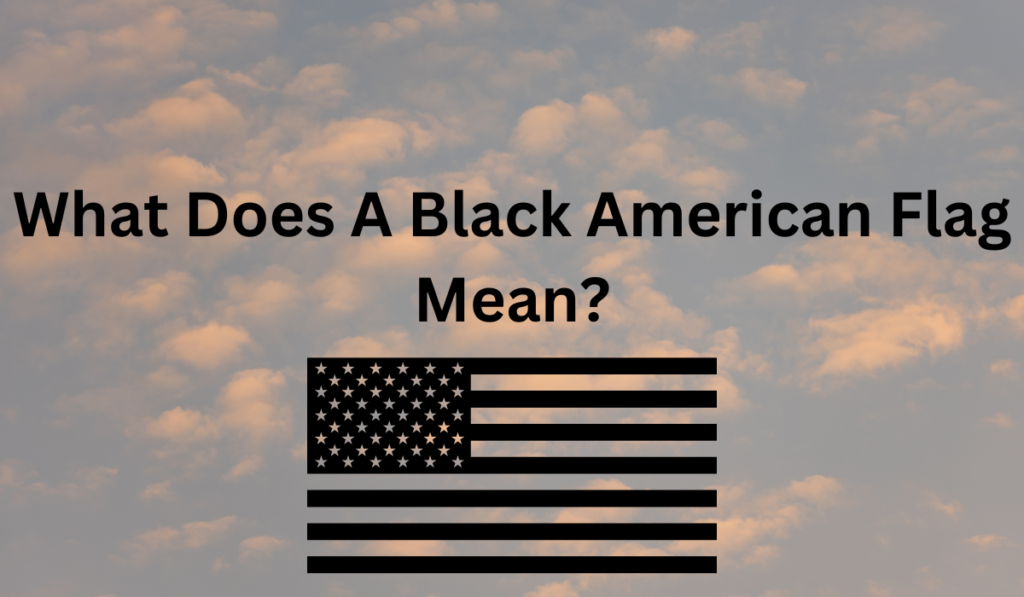
The proliferation of monochrome banners has created intense public friction because multiple designs share overlapping visual elements while conveying radically divergent ideas.
The most widely recognized predecessor to the all-black banner is the Thin Blue Line flag. As chronicled in investigative reporting by Politico, the black-and-white American flag with a single royal blue stripe was created in 2014 by college student Andrew Jacob during the emergence of the Blue Lives Matter movement. What began as an expression of police solidarity quickly sparked bitter civic fights. In November 2019, public officials in Montgomery County, Maryland barred a donated Thin Blue Line display inside a police station, prompting fierce debate reported by WAMU over whether the modified flag belonged in public facilities.
Similar disputes flared in New England. In April 2023, town leaders in York, Maine grappled with a prolonged police vehicle insignia controversy after residents petitioned to remove subdued black-and-gray flags from cruisers. The town ultimately opted to retain them, but the debate highlighted how easily altered flags provoke suspicion.
Compounding this visual landscape is an entirely distinct cultural emblem: the African American Flag created by artist David Hammons in 1990. Blending the layout of Old Glory with the red, black, and green colors of Marcus Garvey’s 1920 Universal Negro Improvement Association, this Pan-African liberation flag serves as an affirmation of Black cultural identity and struggle. Despite fundamentally different colors and historical origins, casual observers often confuse discussions of "Black American flags" between Hammons' celebrated cultural art and the all-black tactical banner flying from pickup trucks.
James Sterling reports on renewable energy developments, climate policy, ecological conservation, and green tech innovations around the globe.
