The Hidden History of Deshawn: What Name Books Often Get Wrong
 By Chloe Bennett
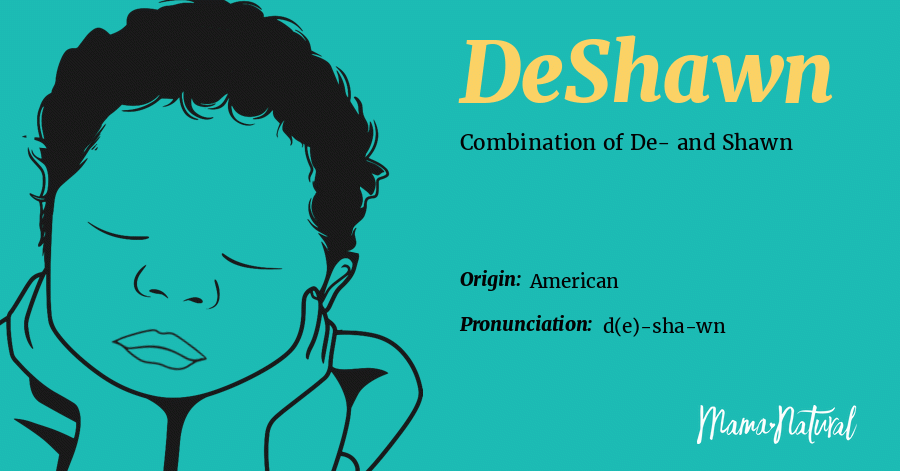
Despite its rich multi-layered construction, the name Deshawn became a frequent target of corporate and academic bias. In the landmark 2004 National Bureau of Economic Research field experiment conducted by Marianne Bertrand and Sendhil Mullainathan, researchers distributed thousands of identical resumes to real help-wanted ads in Boston and Chicago. Half used stereotypical white-sounding names like Emily and Greg; the other half used names like Lakisha and Jamal.
Deshawn was selected as one of the primary names tested on the male resume cohort. The findings were stark. Resumes with white-sounding names received 50% more callbacks for interviews than those with identical credentials bearing Black-associated names like Deshawn. Follow-up labor market audits conduct through 2024 and 2025 confirmed that while overt bias has narrowed slightly in automated resume screens, algorithmic and human prejudice against ethnically distinctive names persists.
This persistent bias reveals an uncomfortable double standard in American onomastics. When white upper-middle-class parents combine names, such as fusing Brayden from Braden and Hayden, or inventing Kinsley and Oaklyn, mainstream culture brands the practice as trendy and modern. When Black parents fused French and Gaelic morphemes fifty years earlier, critics dismissed the results as ungrounded or non-standard. The linguistic mechanics are identical; the social reception has been radically unequal.
Chloe Bennett explores the intersection of pop culture, streaming entertainment, digital trends, and contemporary lifestyle. Her weekly commentary reaches thousands of culture enthusiasts.
