The Evolution of Ombré Nails: How Summer Brights Shifted into Moody Black Sets
 By Sophia Al-Mansoor
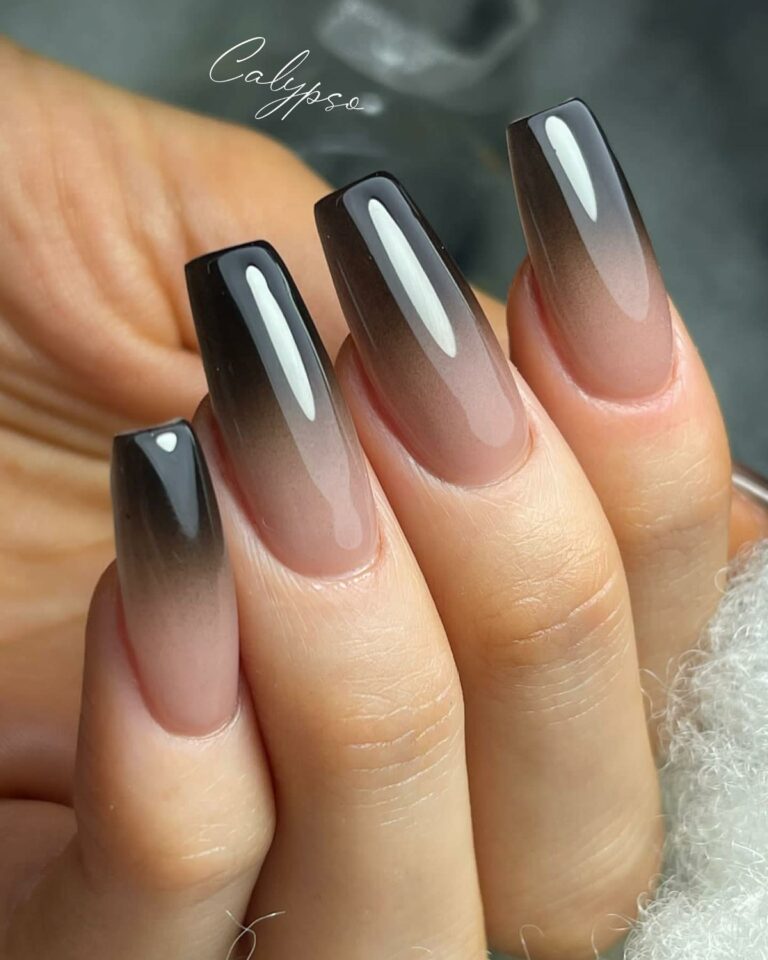
The sudden perfection of contemporary ombré sets is the direct result of hardware evolution behind the salon desk. Historically, technicians created gradients using dense makeup sponges, stippling semi-cured gel polish gradient layers onto the plate. This approach frequently produced visible micro-texture, uneven banding, or stubborn air bubbles that required aggressive buffing to level out.
The widespread introduction of handheld, rechargeable airbrush compressors changed salon workflows. By loading specialized water-based or alcohol-thinned nail lacquers into a 0.2mm nozzle, artists atomize black pigment into microscopic mist. The dispersion falls on the nail in uniform layers, creating smoke-level transitions without adding bulk to the nail enhancement.
| Application Method | Service Duration | Visual Transition Quality | Average Salon Surcharge |
|---|---|---|---|
| Handheld Airbrush Mist | 15, 25 minutes | Hyper-diffused, zero visible lines | $25, $40 |
| Dual-Density Sponge Stippling | 25, 35 minutes | Slight stipple texture, medium blend | $15, $25 |
| Wet-Gel Ombré Brush Blending | 30, 45 minutes | Artisanal, prone to streak lines | $20, $30 |
The chemistry must be managed carefully. Airbrushed lacquer requires total moisture evaporation before sealing; sealing damp solvent under gel traps pockets that cause delamination within 48 hours. When using builder gels or acrylics, technicians rely on high-output LED lamps operating at 365+405nm wavelengths to cure dense black pigments completely down to the base layer.
Sophia analyzes international trade, startup ecosystems, retail transformation, and supply chain logistics for modern digital publications.
