The Evolution of Mojo Jojo's Look: from 1998 Animation to Live-Action Rumors
 By Sophia Al-Mansoor
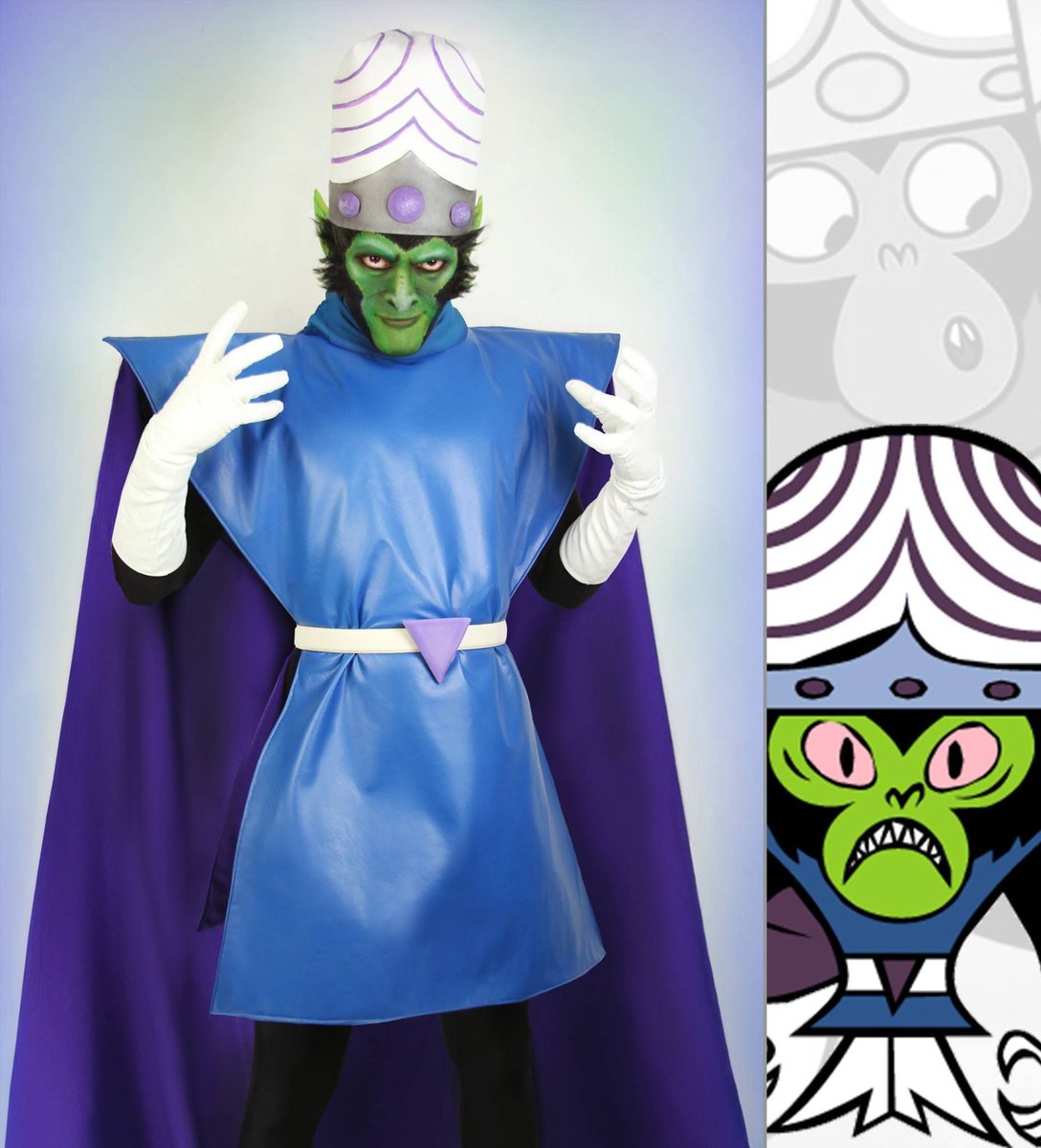
Mojo Jojo works on paper because his visual design is built on stark contrast. McCracken stripped the Townsville supervillain down to iconic geometric shapes: a cylindrical torso, sharp triangular shoulder caps, and a massive circular dome that dominates his upper body. The color palette relied on high-contrast pairings. Deep imperial purple clashed deliberately with surgical white and bright turquoise skin, signaling both laboratory origin and delusions of royalty.
That visual economy made the character instantly recognizable at 24 frames per second. Animators could twist his expressions from comedic frustration to genuine menace with just a few pen strokes. Yet, the cartoon never had to answer practical physical questions. How does a real chimpanzee support an exposed brain three times the size of its skull? How does a floor-length cape stay anchored to rigid shoulder pauldrons during combat? For twenty years, these physical realities went ignored because early DIY Mojo Jojo cosplay relied almost entirely on lightweight papier-mâché, hollow plastic bowls, and cotton-blend cloaks.
Sophia analyzes international trade, startup ecosystems, retail transformation, and supply chain logistics for modern digital publications.
