The Evolution of Happymod: from Android Modding Giant to Persistent iOS Myth
 By Sarah Jenkins
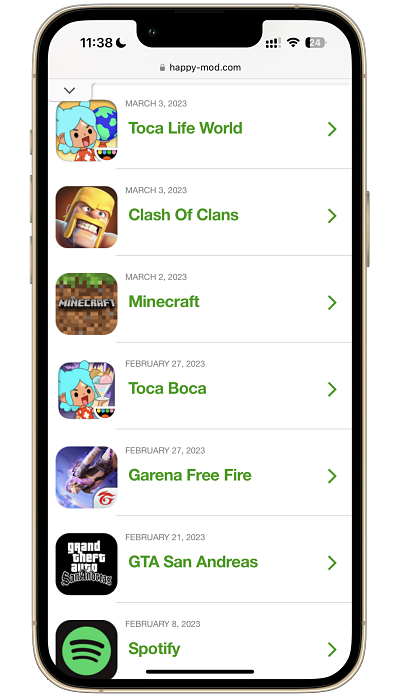
HappyMod succeeds on Android because of Google's package structure. Android applications compile into APKs that can be downloaded through any browser, unpacked via basic tools, adjusted with modified DEX code, and re-signed using basic debugging certificates. With Android's "Install Unknown Apps" permission enabled, anyone can load a modified APK in seconds.
Apple builds iPhones on a fundamentally different philosophy.
At the base level sits Apple sandbox security. Every iOS application executes in an isolated container. An app cannot inspect another app’s directories, alter its memory stack, or inject arbitrary dynamic libraries (dylibs) without root access. Android games often store asset values and currency counters in accessible directories. On iOS, modifying those local variables requires either runtime debugging entitlements or an unpacked, decrypted binary signed with a valid cryptographic identity.
Furthermore, Apple enforces kernel-level signature verification through the Apple Mobile File Integrity (AMFI) daemon. If an iPhone encounters a binary whose cryptographic hash does not match an approved signature from Apple’s servers or an authenticated developer profile, the operating system halts execution instantly.
HappyMod’s entire business model relies on automated community patching. Translating that model to iOS would require developers to crack FairPlay DRM on every single app, inject dylibs, re-sign the entire payload, and distribute custom IPA packages. Apple’s architecture turns a simple script into a technical marathon.
Sarah Jenkins is a veteran tech journalist with over 12 years of experience covering artificial intelligence, mobile innovations, and digital ethics. Her insights have appeared in leading technology publications worldwide.
