The Evolution of Element Sr: from 18Th-Century Discovery to Modern Tech
 By Sophia Al-Mansoor
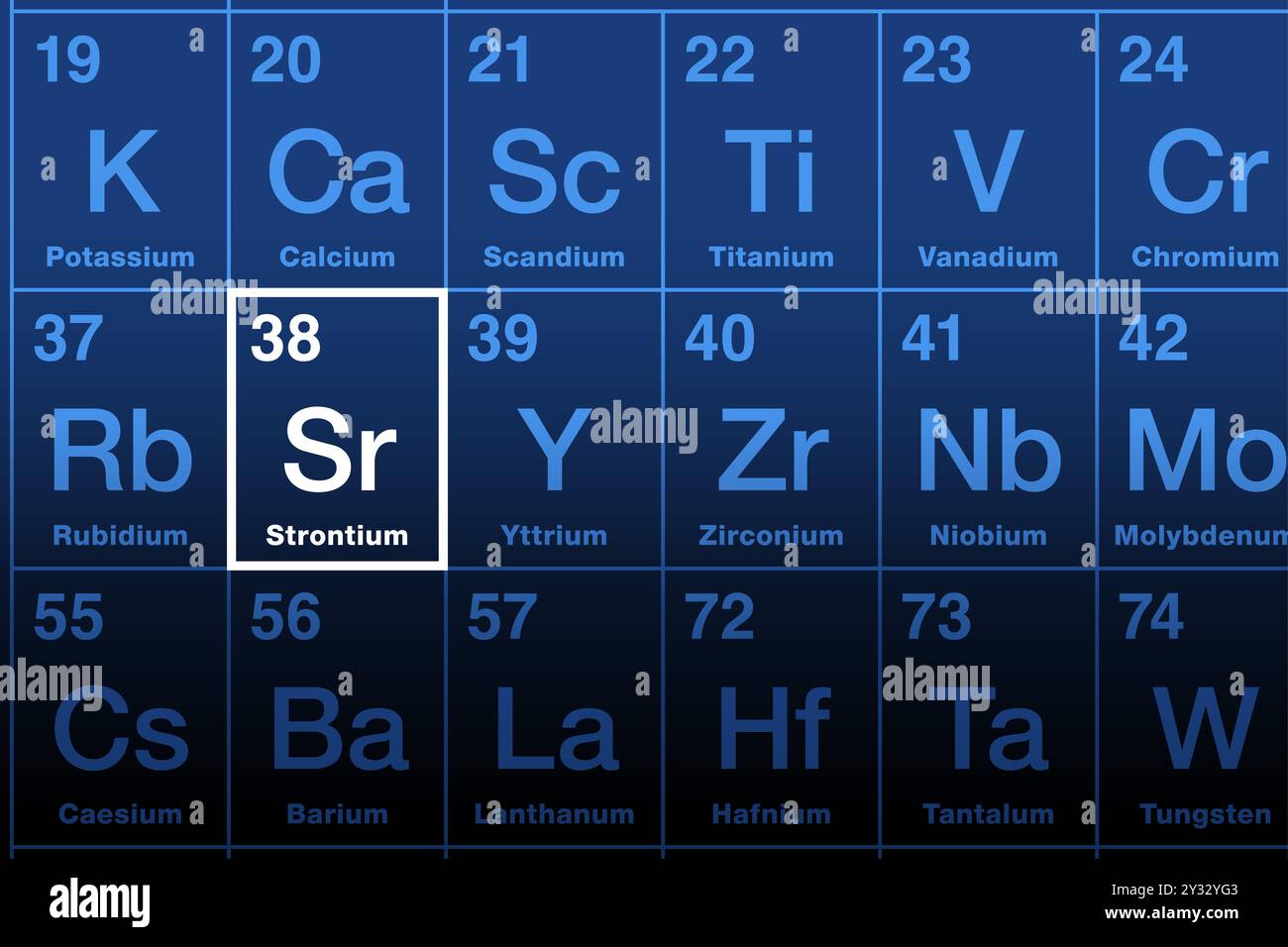
Q1: Why is strontium designated by the symbol Sr on the periodic table?
A1: The symbol Sr derives directly from the element's name, which honors Strontian, the Scottish village where the mineral strontianite was identified in 1790. English chemist Humphry Davy coined the formal name when he isolated pure metallic strontium in 1808.
Q2: Why are optical lattice clocks replacing cesium clocks?
A2: Cesium clocks operate on microwave frequencies around 9.2 gigahertz. Strontium optical lattice clocks operate on optical frequencies around 430 terahertz, roughly 46,000 times higher. Splitting time into vastly smaller fractions provides thousands of times greater timing accuracy and stability, making optical clocks ideal for global navigation, geodesy, and tests of general relativity.
Q3: Is elemental strontium safe to handle in a laboratory?
A3: Pure elemental strontium is chemically reactive and poses physical hazards. It tarnishes instantly in air and reacts vigorously with water to generate flammable hydrogen gas and caustic strontium hydroxide. It must be stored under mineral oil or in inert argon gas. Unlike its radioactive byproduct Sr-90, naturally occurring stable strontium metal is not radioactive and carries low systemic toxicity, though handling requires strict protection against fire and alkali burns.
Sophia analyzes international trade, startup ecosystems, retail transformation, and supply chain logistics for modern digital publications.
