The Complete Guide to the Flat Machine Press: Setup, Cues, and Programming
 By Elena Rostova
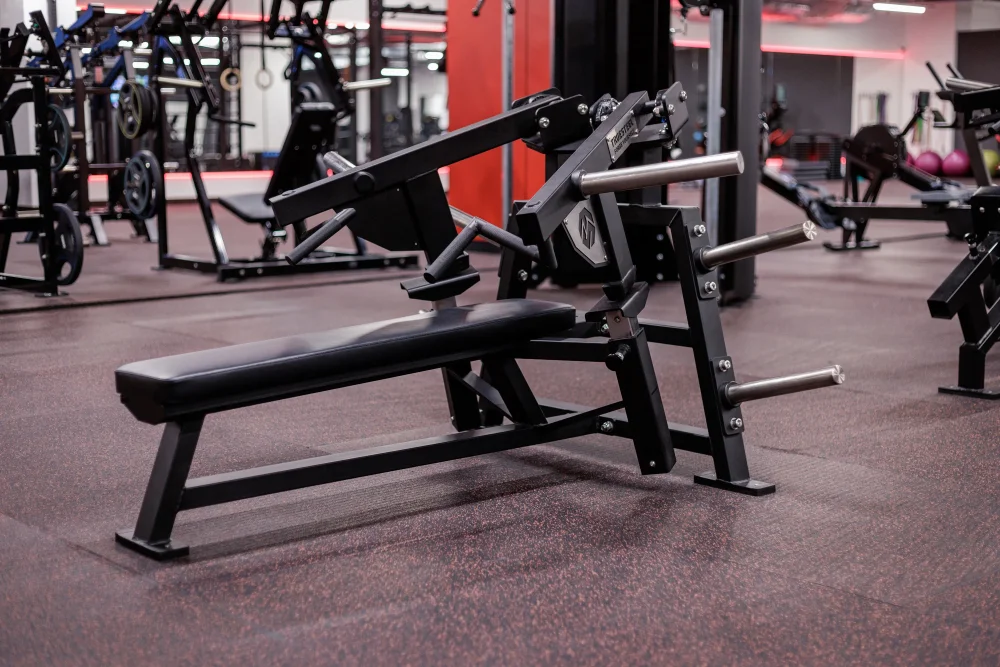
The barbell bench press remains a peerless metric of absolute powerlifting performance, but it falls short as an isolated mass builder. A standard bar fixes your hands in place, forcing your wrists, elbows, and glenohumeral joints to move through an inflexible path. For lifters with longer limbs, shallow rib cages, or prior labrum fraying, that rigid path frequently pushes the humerus into excessive internal rotation at the bottom of the rep.
The rise of the machine chest press as a legitimate barbell bench press alternative addresses these structural flaws. Modern gym floors in 2026 feature machinery engineered around natural human kinematics. Converging link arms match the natural arc of the pec fibers, sweeping inward as you extend. Instead of the tension falling off at lockout, a notorious flaw of free weights where gravity pulls straight down through stacked bones, a high-end converging chest press machine maintains peak resistive torque all the way through peak contraction.
Removing external stability demands also fundamentally alters muscular recruitment. Research across sports biomechanics shows that as balance requirements increase, maximum force output drops. By eliminating the fear of dropping several hundred pounds on your sternum, the machine allows you to exploit high-threshold motor units. You can safely train to the point where the concentric speed grinds to a dead stop, generating the localized muscular damage and mechanical tension required for aggressive pectoralis major hypertrophy.
Elena Rostova holds a Master's degree in Public Health Journalism. She covers groundbreaking medical research, holistic wellness trends, mental health awareness, and nutritional science.
