Why Translating 'These' in Spanish Trips up Even Advanced Learners
 By Robert Thorne
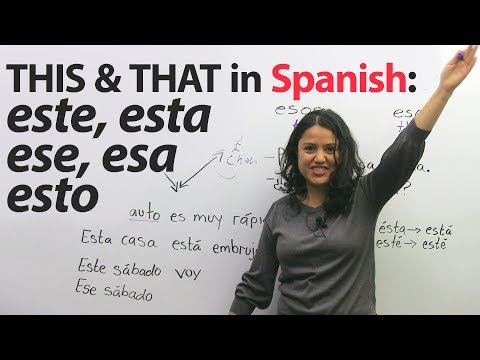
Generations of students were taught that demonstrative pronouns required an acute accent mark (tilde diacrítica) to distinguish them from demonstrative adjectives. Under the old convention, writing estos libros (these books) called for plain letters, but "quiero éstos" (I want these ones) demanded an accent on the first vowel.
The Real Academia Española (RAE) disrupted this convention in its comprehensive spelling reform, ruling that written accents on demonstratives are unnecessary. Because context almost always clarifies whether the word functions as an adjective or an independent pronoun, the RAE declared the accent obsolete except in rare sentences with true syntactic ambiguity.
In 2023, traditionalist members within the Academy pushed back, prompting a clarification: writers may place an accent on éstos or éstas if they perceive authentic ambiguity, but modern digital publishing and standard curricula strongly favor dropping the mark entirely. Today, cleaner typography dominates print newsrooms and academic texts throughout Latin America and Spain.
Robert Thorne covers electric vehicle innovations, autonomous driving systems, global mobility trends, and automotive engineering developments.
