The Complete Bilingual Suspension Guide: Translating Amortiguadores to English
 By Alexander Ross
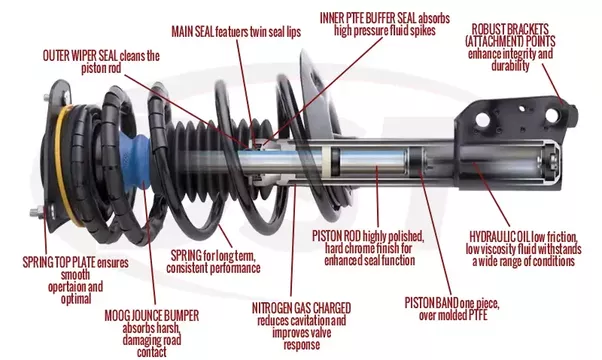
Understanding the mechanical differences between these components guarantees you select the correct catalog category when translating terms across languages.
A shock absorber, technically a hydraulic or gas-charged damper, has one dedicated assignment. It prevents your vehicle from bouncing endlessly after striking a pothole. Springs carry the vehicle's physical weight; shocks simply regulate the spring's release of energy. You can physically unbolt and remove a traditional shock absorber from a light truck's solid rear axle, and the truck will still sit at its exact ride height on the tires. Driving it will feel wild and uncontrolled, but the chassis will not collapse.
A MacPherson strut alters the entire engineering equation. Invented by automotive engineer Earle S. MacPherson in the late 1940s, the strut replaces the upper control arm and incorporates the damping piston, coil spring, and steering pivot into a single structural column. If you unbolt a vehicle's front strut assembly, the wheel hub flops outward, the suspension collapses, and the car drops directly onto its frame. Struts handle severe side loads, braking forces, and lateral steering torque.
When searching English parts catalogs for amortiguadores delanteros on front-wheel-drive sedans, crossover SUVs, or compact hatchbacks, you are almost always searching for front struts rather than front shocks.
Alexander Ross has covered the video game industry for a decade, writing deep dives on game design, esports tournaments, VR developments, and gaming culture.
