The Body Modification Shift: How Floating Navel Jewelry Became the 2026 Industry Standard
 By Elena Rostova
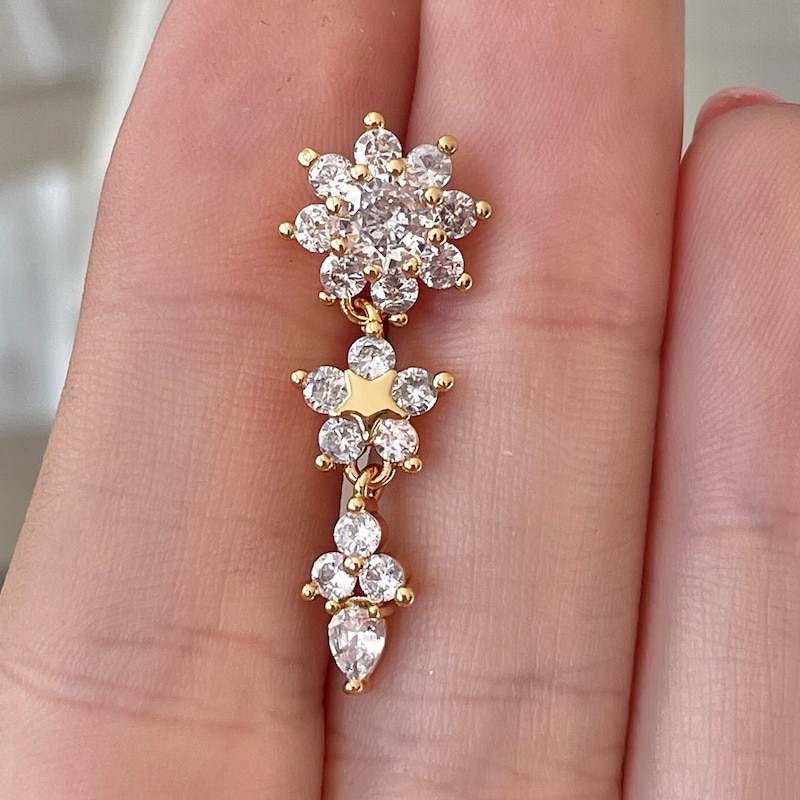
Hardware composition is just as critical as its physical shape. The base barbell must withstand human skin chemistry, sebum, and moisture for half a year of active healing. High-volume studios now treat ASTM F-136 implant grade titanium as the absolute floor for navel piercings, outright rejecting cheap mystery metals and generic surgical steel.
Standard surgical steel often contains unbonded trace nickel, which leaches into raw tissue and triggers allergic contact dermatitis. By contrast, verified implant titanium is fully biocompatible, light, and chemically inert. When combined with an internally threaded barbell or a modern threadless push-pin mechanism, the channel is spared the jagged micro-tears caused by externally threaded screws dragging across raw fistula walls.
The interior architecture relies on the flat disc bottom. By capping the 14-gauge curved titanium barbell with an ultra-smooth, low-profile disc that sits flush against the inner shelf, piercers eliminate the lever arm entirely. When the navel creases, the flat disc slides smoothly into the fold without catching, twisting, or tilting the jewelry. The piercing channel experiences near-zero lateral shear.
Elena Rostova holds a Master's degree in Public Health Journalism. She covers groundbreaking medical research, holistic wellness trends, mental health awareness, and nutritional science.
