Sunni vs Shia Alliances Mapped: Who Backs Whom in the Escalating Regional Crisis?
 By Marcus Vance
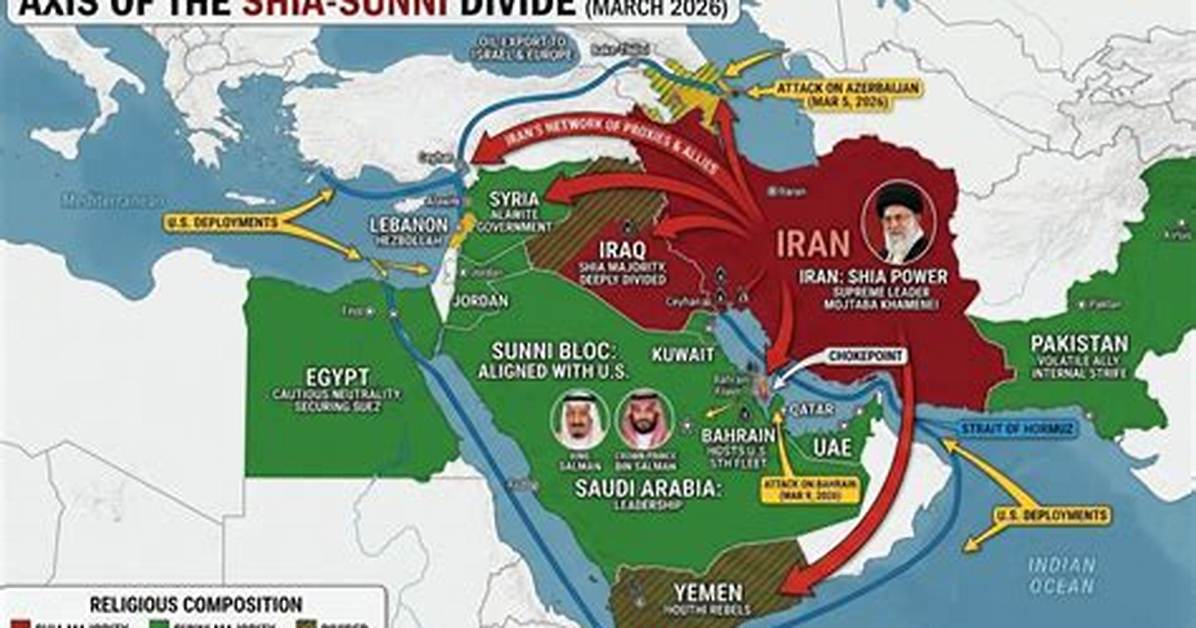
The contemporary weaponization of confessional labels began during the 1979 Iranian Revolution. When Ayatollah Ruhollah Khomeini ousted the Western-backed Shah, he established an Islamic republic dedicated to exporting clerical revolutionary thought. This development alarmed the hereditary Sunni monarchies across the Persian Gulf, who viewed revolutionary republicanism as a direct challenge to their domestic authority.
The United States invasion of Iraq in 2003 intensified these sectarian tensions. By dismantling Saddam Hussein's Sunni-dominated Ba'athist government, Washington altered the regional balance of power. The democratization process handed power to Iraq’s long-suppressed Shia majority. This shift gave Tehran access to an uninterrupted terrestrial corridor running through Baghdad and Damascus to Beirut, which Jordanian King Abdullah II famously characterized in 2004 as a rising "Shia Crescent."
During the proxy wars in Syria, Yemen, and Iraq, armed groups frequently mobilized fighters using historical grievances. Militias recruited recruits by invoking the martyrdom of Hussein or framing conflicts as defenses of historical shrines, such as Sayyida Zaynab in Damascus. In practice, operational commands in these conflicts were driven by supply lines, drone positioning, and sea-lane control rather than disputes over liturgical jurisprudence.
Marcus Vance is a cybersecurity auditor and technology writer dedicated to educating the public about online safety, data privacy regulations, enterprise security, and emerging cyber threats.
