Right and Left in Spanish Visualized: Foolproof Memory Hacks and Street Sign Realities
 By Maya Lin-Takahashi
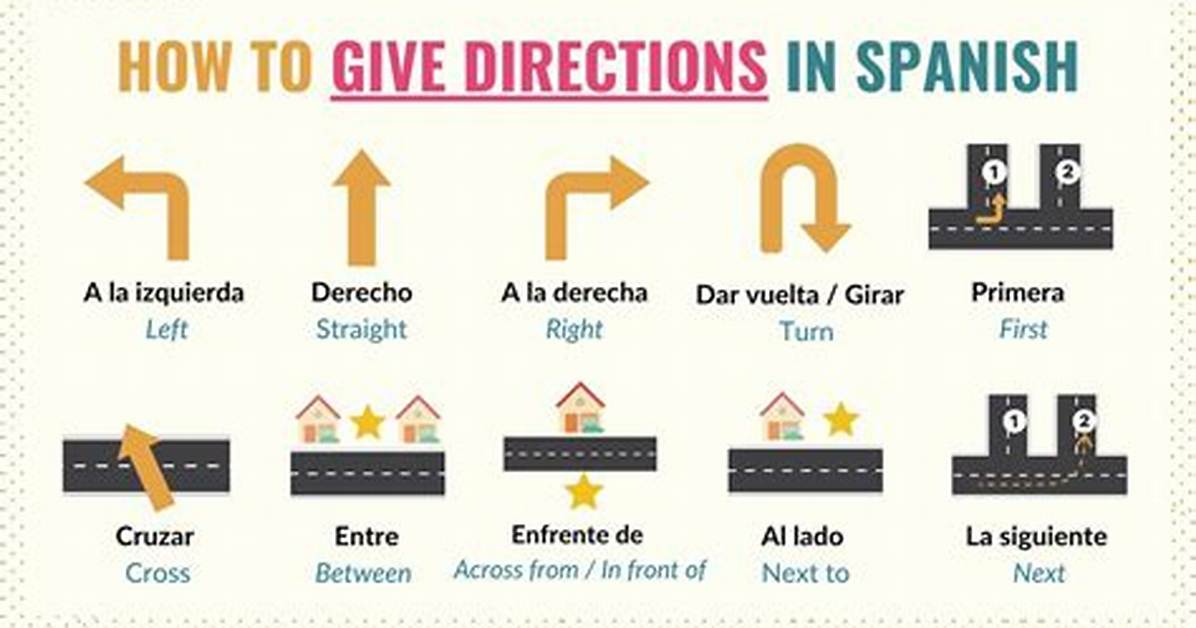
Locals rarely describe routes purely with geometric turns. Real-world wayfinding relies on landmarks, proximity, and intuitive spatial markers.
When giving directions in spanish or receiving them from an elder sitting outside a bakery, spatial orientation takes over:
- "On the right-hand side." Use this when pinpointing a destination rather than instructing a turn. La farmacia está a la mano derecha.
- "Just around the corner." This is notoriously imprecise. In Buenos Aires or Bogotá, a la vuelta might mean ten meters away, or it could mean three blocks down and behind a cathedral.
- "Half a block." Essential for taxi drops. Déjeme aquí a media cuadra, por favor.
- "At the end of the hall/street." Indicates you must continue moving until you hit a physical barrier.
Do not ignore cardinal directions in spanish, particularly in structured grid cities like Bogotá, where streets are designated by Carreras (running north-south) and Calles (running east-west). In these environments, people navigate using el norte (north), el sur (south), el este or el oriente (east), and el oeste or el poniente (west).
In Bogotá, the towering Andes mountains anchor the eastern boundary. If the mountains are on your right, you are driving hacia el norte (toward the north). Every local uses this geographic anchor instead of relative turns.
Maya is a hardware enthusiast who tests and reviews smart home devices, smartphones, wearables, and audio gear. She focuses on practical consumer value and build quality.
