Permanent Standard Time Vs. Daylight Time: Which Policy Makes More Sense?
 By James H. Sterling
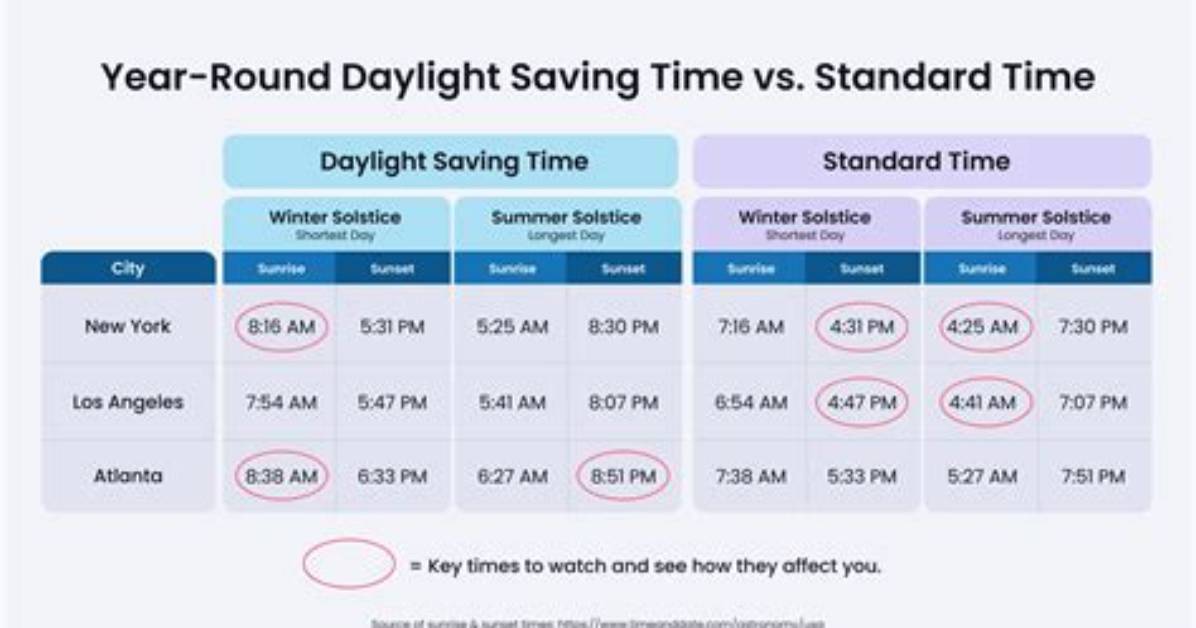
The bipartisan time policy debate has repeatedly run into a legislative wall. The Sunshine Protection Act, spearheaded in previous sessions by Senator Marco Rubio, sought to make daylight saving time permanent nationwide. While the Senate passed the bill by unanimous consent in 2022, the measure stalled instantly in the House of Representatives once pediatricians, sleep scientists, and transportation safety advocates registered fierce objections.
States find themselves in a peculiar legal trap. Under the Uniform Time Act of 1966, any state may choose to remain on standard time year-round without federal approval. Arizona, Hawaii, and overseas territories have exercised this option for decades. However, the statute explicitly forbids any state from remaining on daylight saving time permanently.
Nineteen states have passed state-level laws or resolutions signaling their intent to adopt permanent daylight saving time. Yet those state laws remain dead letters, entirely non-functional until Congress amends federal law. Because lawmakers remain terrified of repeating the 1974 winter backlash, the federal bill sits in limbo session after session.
James Sterling reports on renewable energy developments, climate policy, ecological conservation, and green tech innovations around the globe.
