Periodic Table Layout Decoded: Visual Proof of How Groups and Periods Work
 By Elena Rostova
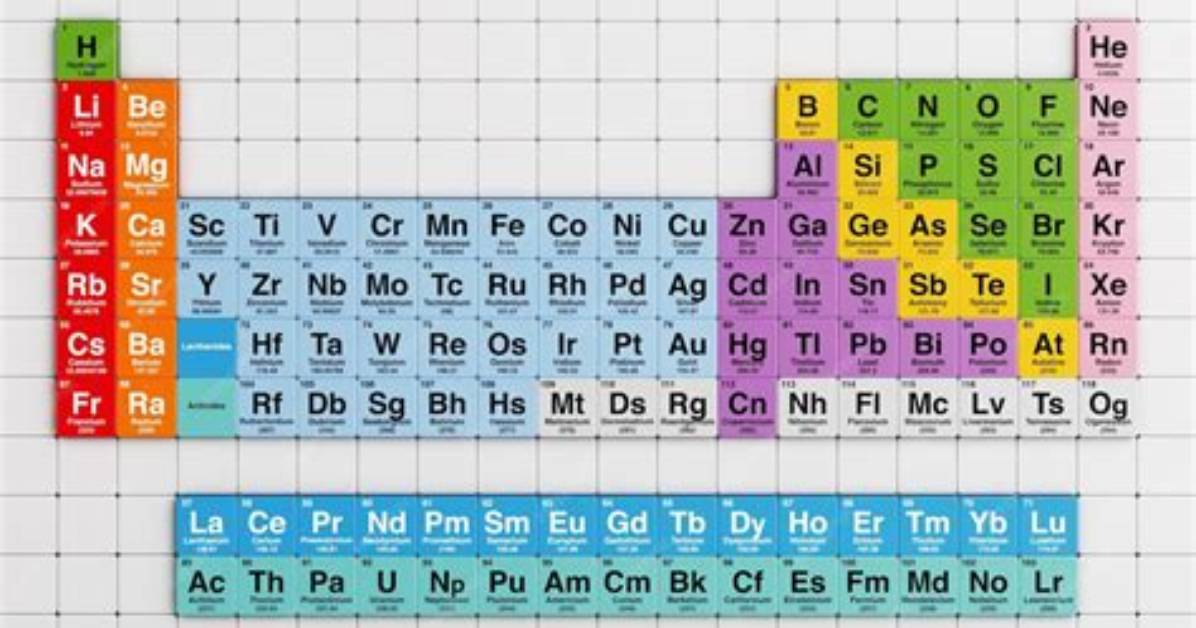
The periodic table is arranged around two distinct axes that communicate entirely different sets of physical rules. When you scan downward through one of the 18 vertical columns, you are observing a family of elements categorized as a group. When you scan horizontally across one of the 7 horizontal rows, you are tracking a period.
Early pioneers like Dmitri Mendeleev originally grouped elements by atomic mass and observed chemical properties in 1869. That system was imperfect because mass does not dictate chemical behavior. In 1913, English physicist Henry Moseley established that the true organizer of matter is atomic number, the precise count of protons housed within an atom's nucleus. Modern chemistry arranges elements from left to right and top to bottom in strict atomic number progression, beginning with hydrogen at 1 and terminating with oganesson at 118.
This sequential ordering creates a natural rhythm. As protons are added to the nucleus one by one, an equal number of electrons must occupy shells surrounding that nucleus to maintain electrical neutrality. Because electrons can only occupy specific, mathematically defined energy brackets before forcing subsequent electrons into higher orbits, the properties of the elements repeat in regular, repeating intervals. This phenomenon is known as the periodic law.
Elena Rostova holds a Master's degree in Public Health Journalism. She covers groundbreaking medical research, holistic wellness trends, mental health awareness, and nutritional science.
