Mastering the 1980S Retro Aesthetic: Tested Chatgpt Self-Portrait Prompts
 By Alexander Ross
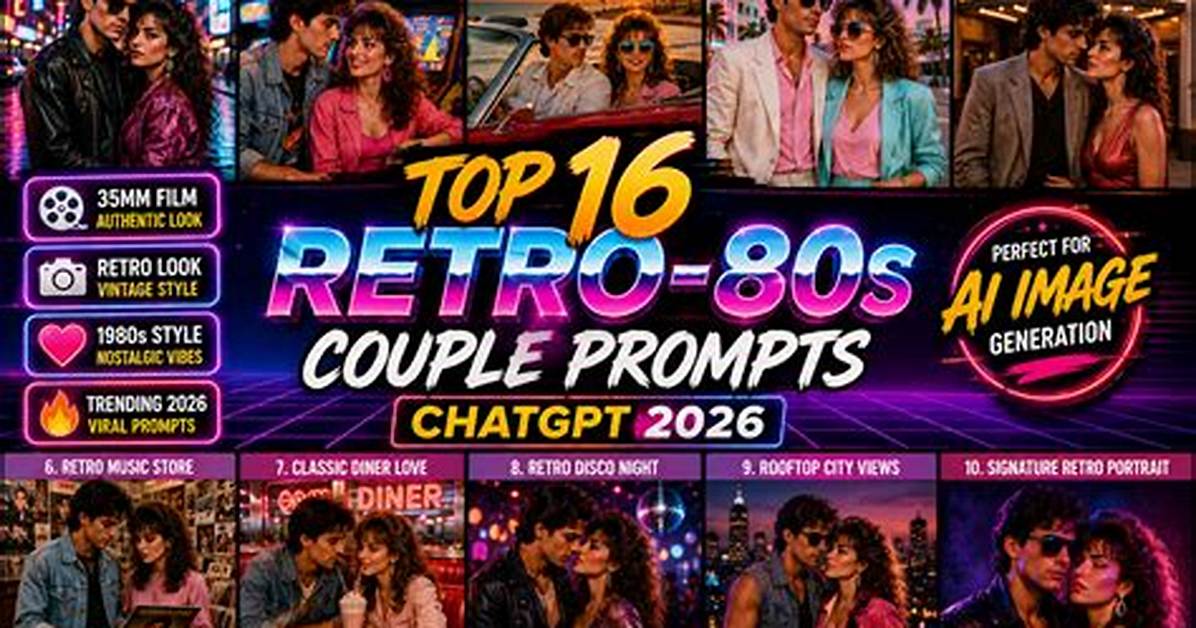
The primary hurdle in AI-assisted portraiture is maintaining identity across prompt iterations. When users ask for voluminous perm hairstyles or radical wardrobe changes, the model often replaces unique facial features with an idealized, generic face. Preserving your identity requires giving the prompt precise anatomical boundaries.
First, upload a clear, forward-facing reference photo with neutral lighting. Instruct ChatGPT to preserve the specific eye spacing, jawline angle, and nose bridge contours of the subject. Use explicit instructions: "Do not alter the subject's face shape, eye color, or ethnic features. Apply the 1980s styling exclusively to the hair, clothing, lighting, and film grain." This creates clear separation between the subject's facial structure and the surrounding retro aesthetic.
Second, manage the film grain prompt cues carefully. Vague phrases like "make it vintage" cause the model to generate blurry, low-resolution images. Specify physical artifacts instead. Words like "chromatic aberration," "halation on high-contrast edges," "organic silver-halide grain," and "scanned 35mm slide" prompt the generator to retain high underlying detail while adding a tactile analog surface texture.
Alexander Ross has covered the video game industry for a decade, writing deep dives on game design, esports tournaments, VR developments, and gaming culture.
