Look Inside a Barnacle: Video Proof That These Rock-Like Shells Are Alive
 By Elena Rostova
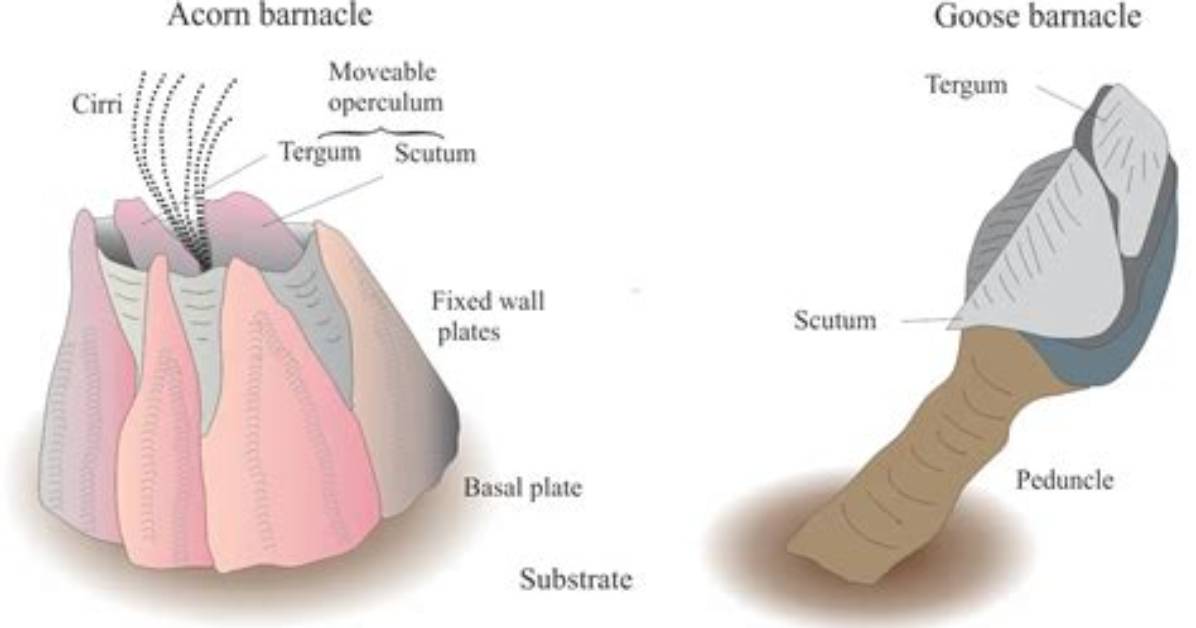
Understanding crustacean biology requires looking past the mature, anchored adult. Barnacles do not begin life trapped in limestone. They start as mobile, free-swimming creatures navigating the open ocean. Female barnacles incubate fertilized eggs inside their shell cavity, releasing thousands of microscopic nauplius larvae into the coastal currents.
These early larvae spend weeks drifting among surface plankton, feeding, and undergoing several distinct molting phases. During the subsequent cyprid stage, the animal ceases feeding altogether and begins hunting for a permanent foundation. Guided by specialized antennules that test surface texture and sniff out pheromones from existing colonies, the cyprid scouts rocks, hulls, or whale skin. Once it selects a location, its antennary cement glands secrete a phenolic protein compound capable of curing underwater under extreme hydro-pressure.
| Development Stage | Physical Form & Anatomy | Locomotion & Diet | Approximate Duration |
|---|---|---|---|
| Nauplius | Single median eye, three limb pairs, shield-like carapace | Free-swimming; feeds on unicellular algae | 14, 21 days (5, 6 distinct molts) |
| Cyprid | Bivalve-like shell, grasping antennules with cement glands | Active swimmer and crawler; non-feeding stage | 3, 14 days searching for substrate |
| Juvenile | Inverted body plan, initial mineralized plates forming | Stationary; begins deployment of juvenile cirri | 10, 30 days post-settlement |
| Adult | Rigid multi-plate shell, six pairs of feather-like cirri | Sessile; active filter feeding on plankton and detritus | 1, 15+ years depending on species |
Because these animals belong to the arthropods, their bodies must undergo a periodic molting cycle to accommodate physical growth. While the external calcium carbonate shell expands incrementally around its base and never sheds completely, the soft body inside casts off its chitinous skin. Divers and beachcombers often discover delicate, hollow skins floating near kelp beds, mistaking them for dead animals when they are merely cast-off cuticles from growing adults.
Elena Rostova holds a Master's degree in Public Health Journalism. She covers groundbreaking medical research, holistic wellness trends, mental health awareness, and nutritional science.
