Inside the 1958 Lockheed Lodestar Disaster: the Investigation and Wreckage of Mike Todd’s Fatal Flight
 By Chloe Bennett
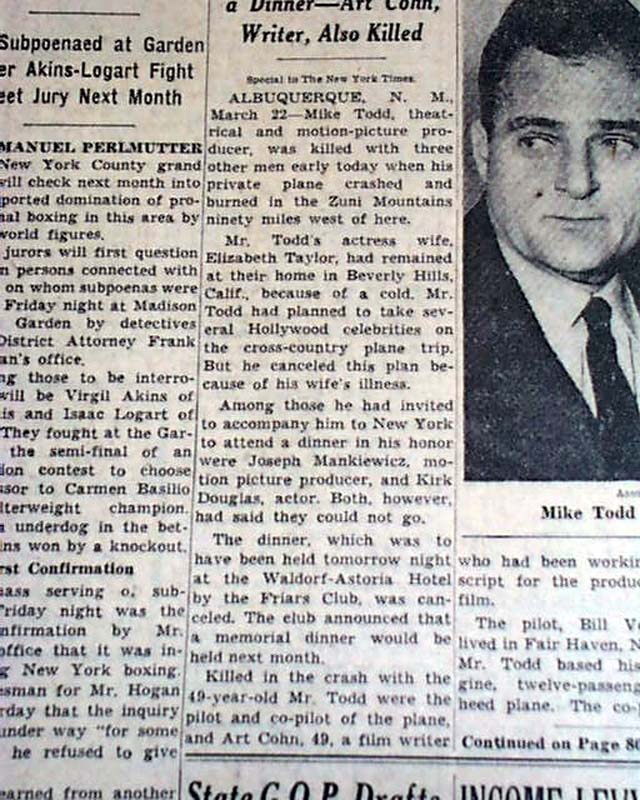
The Civil Aeronautics Board (CAB), the federal regulatory body that investigated air accidents before the creation of the NTSB, launched an exhaustive inquiry into the crash. Their final accident report pointed out deep negligence regarding weight control and pre-flight planning.
Investigators discovered that the Lodestar was certified for a maximum gross takeoff weight of 18,508 pounds. When Verner fueled the plane to capacity at Burbank and loaded passenger luggage, custom interior decor, and emergency gear, the actual weight at takeoff reached 20,585 pounds. The aircraft was more than a ton overweight.
That extra mass compromised the plane's flight limits. When ice began clinging to the wings over New Mexico, the aircraft needed exceptional engine power and clean airflow to maintain altitude. The CAB concluded that with extra fuel and heavy equipment weighing it down, the Lodestar simply could not stay airborne once ice altered the camber of the wings.
The engines showed evidence of functioning at high power up to the second of impact, ruling out mid-air engine failure or fuel exhaustion. The aircraft had stalled in the thin mountain air, flipped into an unrecoverable dive, and struck the terrain nose-first at more than 200 miles per hour.
Chloe Bennett explores the intersection of pop culture, streaming entertainment, digital trends, and contemporary lifestyle. Her weekly commentary reaches thousands of culture enthusiasts.
