‘If Not Friend, Why Friend-Shaped? ’ the Evolutionary Science Behind Cute Memes
 By Chloe Bennett
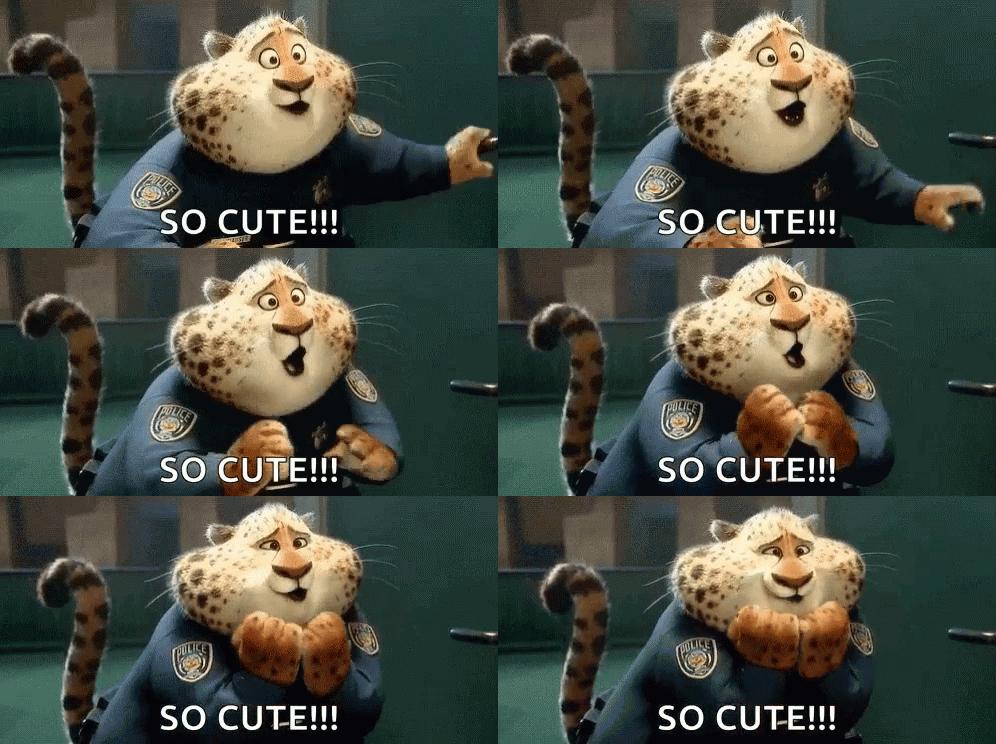
You have seen a picture of an extraordinarily fluffy puppy and muttered, "I want to squish it until it pops," or found yourself clenching your jaw while viewing tiny animal paws. Psychological researchers call this dimorphous expression cute aggression.
A landmark 2015 Yale University study led by Oriana Aragón demonstrated that intense positive feelings occasionally express themselves through superficially aggressive behaviors. In 2018, neuroscientist Katherine Stavropoulos used electrophysiology to record brain activity in individuals looking at baby-schematic creatures. The results confirmed that both the brain's reward system and its emotional regulation networks activate simultaneously.
Cute aggression functions as an evolutionary circuit breaker:
- Sensory Overdrive: An image of a disproportionately round creature floods the mesocorticolimbic pathway with dopamine, creating a temporary state of emotional dysregulation.
- The Incapacitation Threat: If a caregiver becomes overwhelmed by affection for an infant, their ability to defend that infant from actual environmental threats drops to zero.
- The Regulative Rebound: The prefrontal cortex injects a flash of pseudo-aggressive tension, clenching teeth, curling fists, squeezing motions, to shock the brain back to an alert, functional state.
Online, this neurological counter-weight manifests in hyperbolic comment threads. Users post about wanting to "bite," "destroy," or "swallow whole" whatever animal currently graces their screens, translating a legitimate neurochemical balancing act into digital patter.
Chloe Bennett explores the intersection of pop culture, streaming entertainment, digital trends, and contemporary lifestyle. Her weekly commentary reaches thousands of culture enthusiasts.
