How to Write and Pronounce 'Good Morning' in Japanese: Kanji, Hiragana, and Audio Breakdown
 By Maya Lin-Takahashi
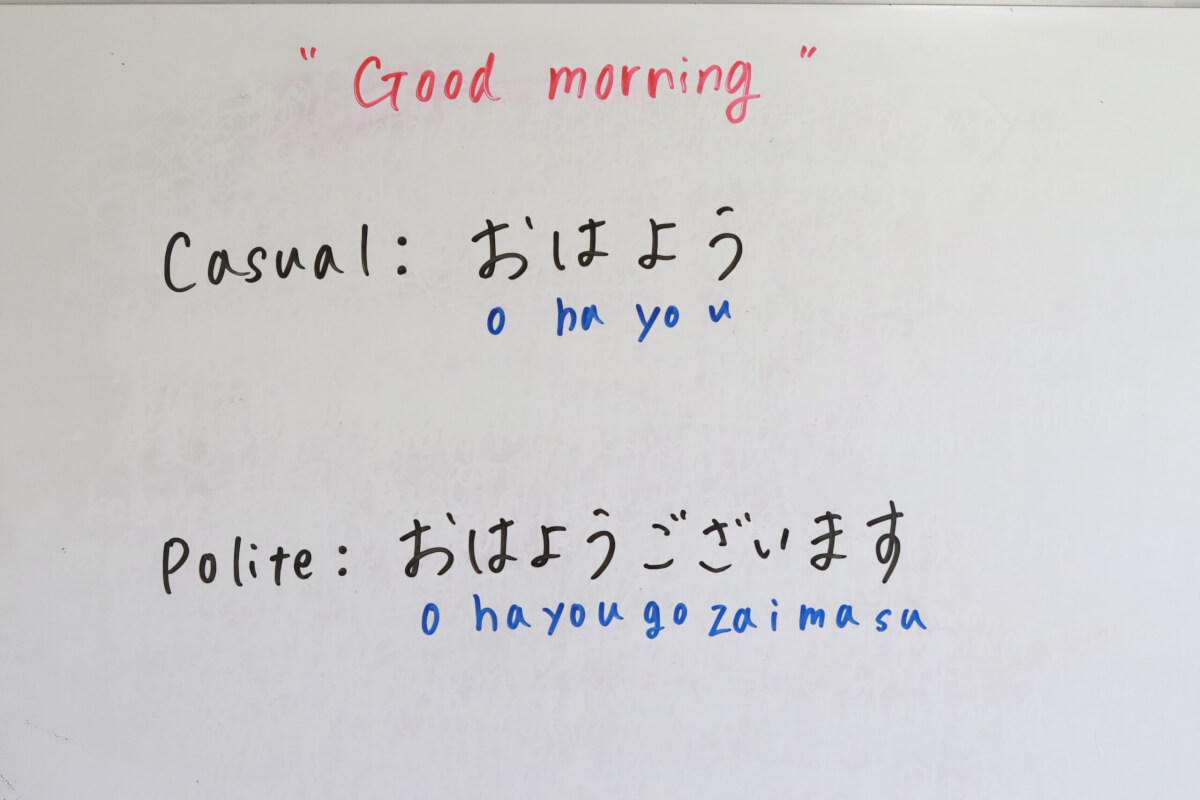
English speakers often stumble over Japanese greetings by imposing English stress accents or misreading romaji transcription. In standard Hepburn romaji, the greeting appears as ohayō gozaimasu or ohayou gozaimasu. Pronouncing each syllable with equal English-style weight creates an unnatural, disjointed cadence.
The first critical phonetic element is the long vowel in ohayou. The sequence of よ (yo) followed by う (u) does not sound like "yo-oo." Instead, it creates an extended "oh" sound, held for two distinct phonetic beats (morae). Transcribing it phonetically yields oh-hah-yoh-oo, but native speakers articulate it as a smooth, prolonged [o-ha-yō]. Cutting that vowel short makes the greeting sound clipped and rushed.
The second trap involves the final syllable of gozaimasu. In standard Tokyo Japanese, the final "u" sound in す (su) is devoiced. You do not say "go-zye-mah-soo." The vocal cords disengage on the final vowel, creating a whispery, crisp "s" ending: [go-zah-ee-mahs]. Pronouncing a hard, rounded "soo" at the end immediately betrays an untrained speaker.
Pitch accent also dictates how natural you sound. Japanese relies on pitch height rather than volume stress. In ohayou, the pitch starts low on o, rises sharply on ha, and remains relatively elevated through the extended yō before tapering off smoothly across gozaimasu. Avoid placing explosive percussive emphasis on syllables the way English speakers naturally do when shouting greetings.
Maya is a hardware enthusiast who tests and reviews smart home devices, smartphones, wearables, and audio gear. She focuses on practical consumer value and build quality.
