How to Say Orange in Spanish: Full Guide to Pronunciation, Grammar, and Shades
 By Marcus Vance
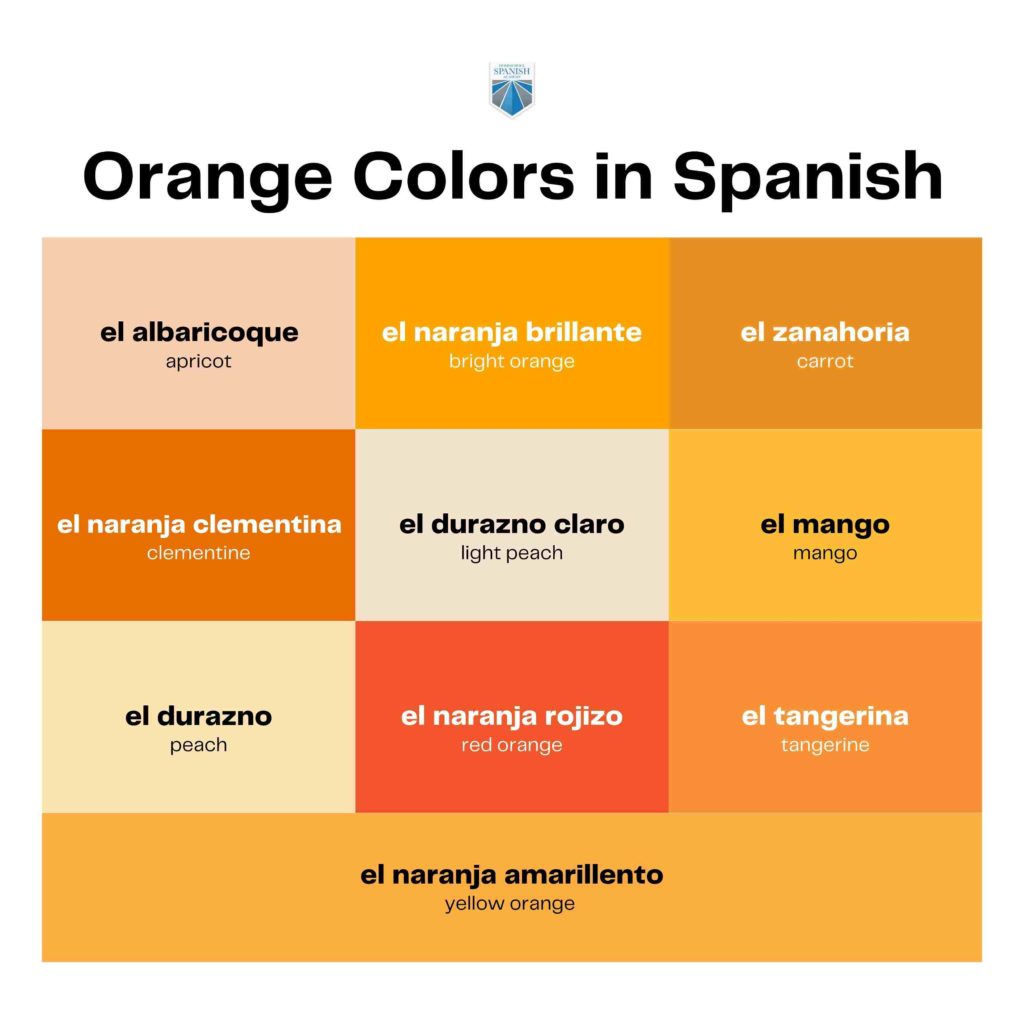
Broadening your vocabulary beyond basic descriptors allows you to capture subtle differences in tone, material, and design. In Spanish, modifying a color adjective with a secondary descriptor (such as "dark" or "light") creates a compound phrase. When this occurs, the entire phrase becomes completely invariable.
If you describe a single dark orange shirt, you write una camisa naranja oscuro. If you buy three of them, you still write tres camisas naranja oscuro. Adding oscuro freezes both words; writing *camisas naranjas oscuras* is a common grammatical error.
Everyday Spanish utilizes several specific shade names:
- Naranja oscuro: Dark orange, frequently used for autumn leaves or burnt hues.
- Naranja claro: Light orange or peach-leaning tones.
- Naranja brillante / chillón: Bright or fluorescent orange, the exact tone of safety cones and high-visibility jackets.
- Mandarina: Tangerine, slightly sweeter and more vibrant than baseline orange.
- Calabaza: Pumpkin orange, common in culinary and seasonal contexts.
- Ámbar: Amber, widely used for traffic lights throughout Latin America and Spain.
- Teja / Terracota: Terracotta or roof-tile orange-red, essential in architectural and home-design discussions.
- Dorado rojizo: Reddish-gold, standard in cosmetic descriptions for hair dyes and bronzers.
Marcus Vance is a cybersecurity auditor and technology writer dedicated to educating the public about online safety, data privacy regulations, enterprise security, and emerging cyber threats.
