How to Say Orange in Spanish: Full Guide to Pronunciation, Grammar, and Shades
 By Marcus Vance
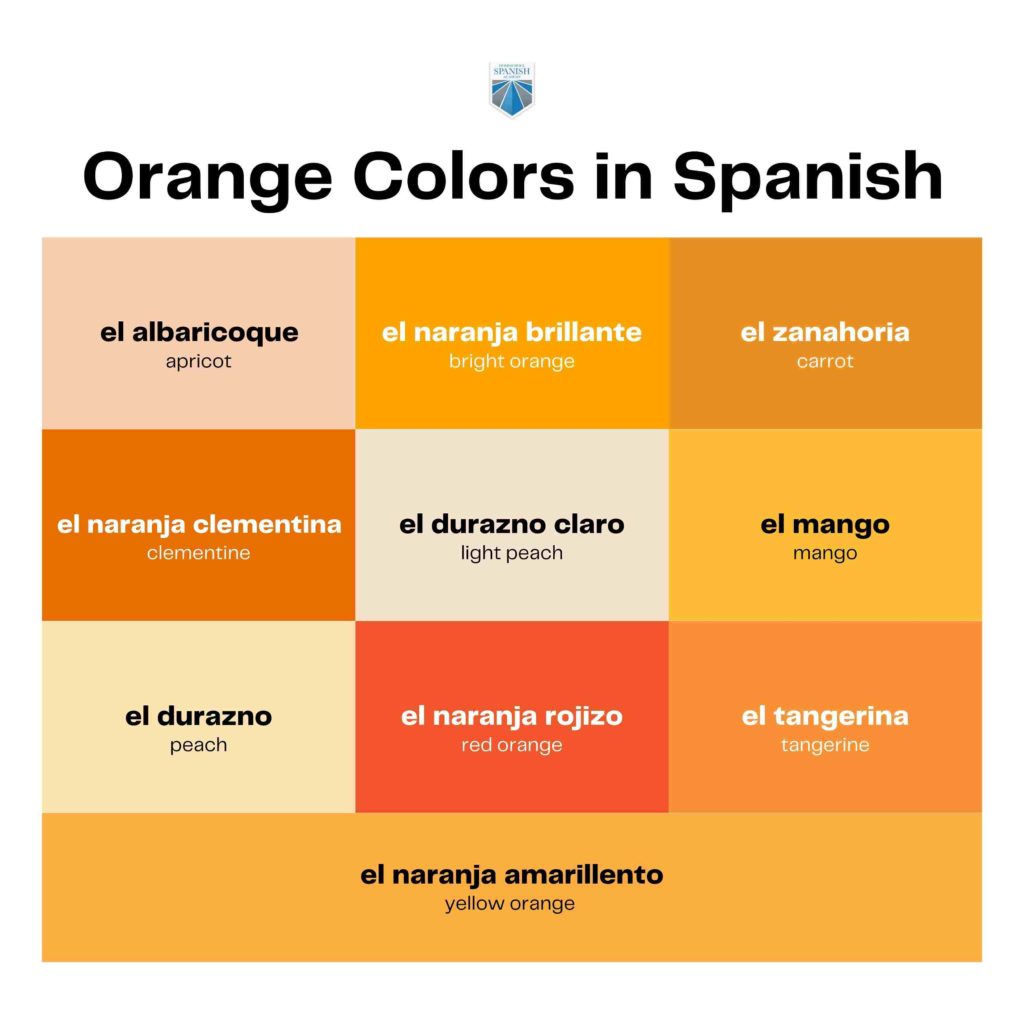
Color adjectives in Spanish generally match the gender and number of the noun they modify. A black shoe is un zapato negro, while two black shoes become dos zapatos negros. With orange, the underlying mechanics are trickier.
Because naranja is derived from a fruit noun, purists historically classified it as an invariable adjective. Under strict traditional syntax, when a noun acts as an adjective (a noun adjunct), it does not change for gender or number. You would write los suéteres naranja, omitting the plural "-s" because the phrase was shorthand for los suéteres color naranja (the sweaters of the color of an orange).
Modern usage has softened this rule. The Real Academia Española (RAE) currently accepts both constructions: the traditional invariable form (las cortinas naranja) and the assimilated plural form of naranja (las cortinas naranjas). What you must never do is alter the word for gender. There is no such color as un libro naranjo. A naranjo is strictly the orange tree. The fruit and color remain naranja regardless of the noun's gender.
In contrast, anaranjado behaves like a standard, fully inflected adjective. It requires strict gender and number agreement across all variations.
| Term | Grammatical Class | Singular Agreement | Plural Agreement |
|---|---|---|---|
| Naranja (Traditional) | Noun Adjunct / Invariable | El coche naranja / La casa naranja | Los coches naranja / Las casas naranja |
| Naranja (Colloquial/Modern) | Assimilated Color Adjective | El coche naranja / La casa naranja | Los coches naranjas / Las casas naranjas |
| Anaranjado | Standard Adjective | El coche anaranjado / La casa anaranjada | Los coches anaranjados / Las casas anaranjadas |
Marcus Vance is a cybersecurity auditor and technology writer dedicated to educating the public about online safety, data privacy regulations, enterprise security, and emerging cyber threats.
