How to Safely Drive at Night with Astigmatism: Proven Tips, Eyewear, and Windshield Fixes
 By Chloe Bennett
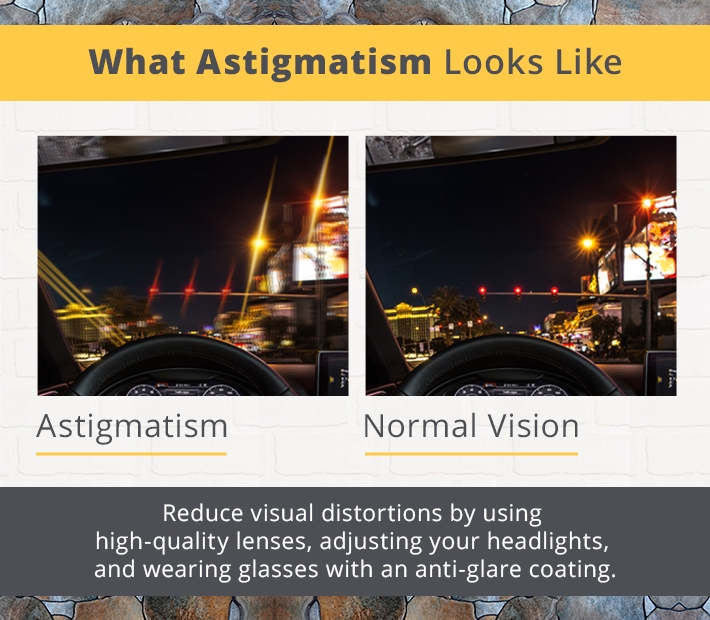
Eyewear fixes optical refraction, but environmental ergonomics dictate ocular endurance. Modern automotive design trends increasingly favor wide digital infotainment screens and high-luminance dashboard instrument clusters. For someone driving with astigmatism, these screens create a physiological trap.
When cabin displays emit harsh blue-white light, they trigger localized pupil constriction while peripheral rod cells attempt to maintain mesopic sensitivity through the windshield. This uneven stimulus exhausts the eye's ciliary muscle and worsens internal ocular scatter.
Adjust cabin displays to their lowest readable brightness setting at night, and shift instrument backlighting toward warm or red hues when vehicle settings permit. Dimming internal screens allows pupils to establish a stable, steady aperture, reducing the visual shock when oncoming vehicles pass.
Equally critical is dynamic gaze management. Staring directly into oncoming traffic forces photopigment bleaching inside the fovea, lingering as temporary blind spots for several critical seconds. When a line of vehicles approaches with misaligned LED lamps:
- Drop your central line of sight down toward the right-hand fog line or lane marking.
- Use indirect peripheral vision to track the lead vehicle’s lateral position.
- Maintain a generous four-second following buffer to account for lengthened visual processing times.
- Schedule a comprehensive visual acuity test every 12 to 24 months to verify that your prescription's cylinder and axis measurements match subtle, age-related changes in corneal curvature.
Chloe Bennett explores the intersection of pop culture, streaming entertainment, digital trends, and contemporary lifestyle. Her weekly commentary reaches thousands of culture enthusiasts.
