How to Hold a Guitar Pick: Complete Step-by-Step Guide for Tone, Comfort, and Speed
 By Chloe Bennett
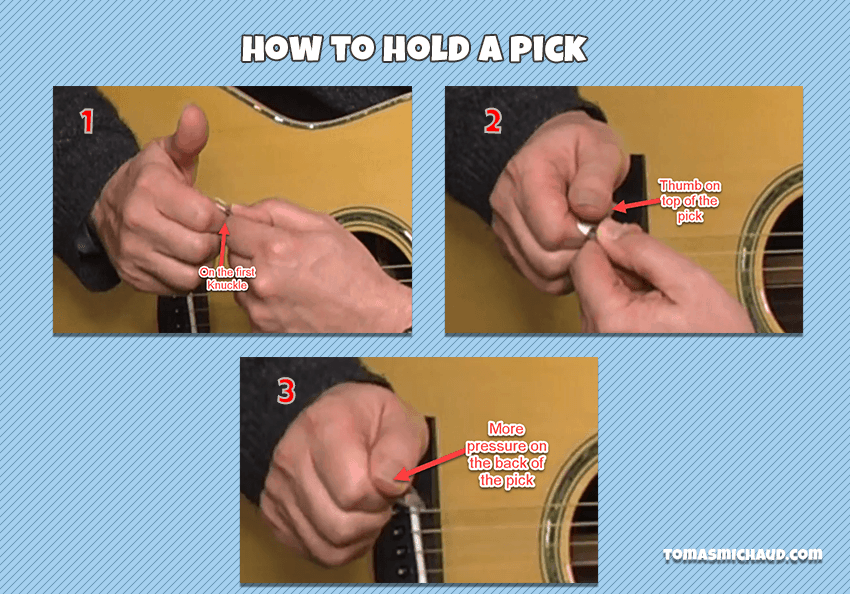
Most players who struggle with wandering picks share the same initial habit: pinch-gripping. They pinch the plectrum between the soft, fleshy pad of the thumb and the flat pad of the index finger. While intuitive, this pad-to-pad orientation creates an unstable pivot point. The meat of the fingertip compresses under string resistance, forcing the player to squeeze progressively harder to keep the pick upright. That reflexive squeeze tightens the flexor muscles in the forearm, destroying fluid wrist movement.
The gold standard among professional clinicians and session players is the pad-to-side plectrum grip technique.
To set this position, curl the index finger naturally into a loose fist, as if resting the hand on a tabletop. Place the flat base of the pick against the outer, radial edge of the index finger’s top knuckle, roughly midway between the fingernail and the first joint. Lay the pad of the thumb flat across the top surface of the pick, creating a firm cross-shape with the index finger. The tip of the pick should protrude roughly 3 to 5 millimeters past the edge of the thumb.
This structural alignment rests the pick against bone support rather than spongy flesh. The thumb position acts as a securing clamp, while the index finger placement provides a rigid platform that absorbs string resistance without yielding. This mechanical lock allows the player to relax their grip, maintaining stability without clenching the hand into a rigid claw.
Chloe Bennett explores the intersection of pop culture, streaming entertainment, digital trends, and contemporary lifestyle. Her weekly commentary reaches thousands of culture enthusiasts.
