How to Drive Safely at Night with Astigmatism: Proven Solutions, Lens Coatings, and Habits
 By Sarah Jenkins
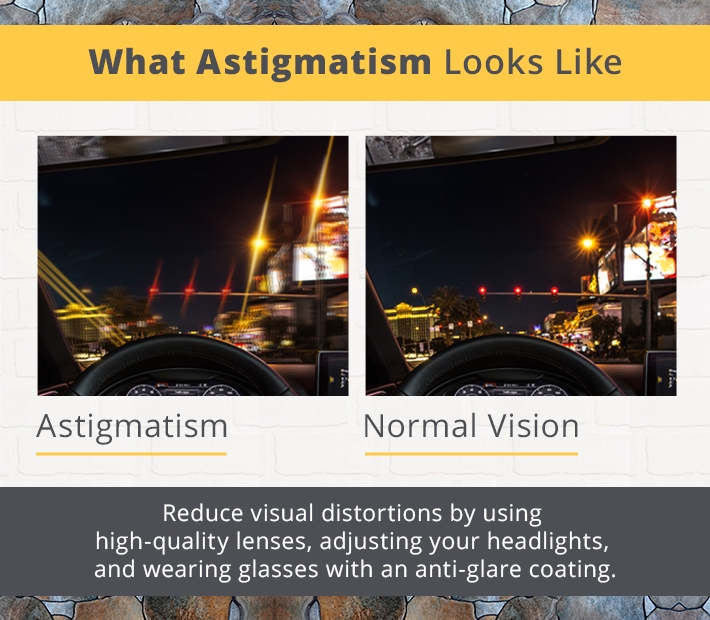
Over the past decade, automotive original equipment manufacturers (OEMs) have shifted en masse from warm halogen bulbs to high-intensity light-emitting diodes (LEDs). While LEDs improve forward illumination for the driver behind them, their optical profile poses a severe challenge for oncoming traffic. Halogen bulbs register a warm color temperature near 3,200 Kelvin, whereas contemporary automotive LEDs operate between 5,500 and 6,500 Kelvin, emitting concentrated blue-wavelength spectrum light.
High-energy blue light scatters far more aggressively within the human eye than longer wavelengths. For motorists with uneven corneal curvature, this creates extreme disability glare, where stray light washes out the retinal image. Furthermore, modern sports utility vehicles and light pickup trucks sit higher off the asphalt, positioning high-lumen projector assemblies directly at eye level for drivers in passenger sedans.
Optometry Times reported in September 2024 that visual complaints tied to nighttime driving have surged among adults ages 25 to 55, driven primarily by the combination of elevated truck headlights and high-output LED emitters. When these sharp, directional beams strike an irregular cornea, the eye cannot resolve the boundary between the oncoming vehicle and the surrounding roadway, generating prolonged afterimages that momentarily blind the driver.
Sarah Jenkins is a veteran tech journalist with over 12 years of experience covering artificial intelligence, mobile innovations, and digital ethics. Her insights have appeared in leading technology publications worldwide.
