Geometric Proof: Visualizing Perpendicular Slope Calculations on a Coordinate Grid
 By Sarah Jenkins
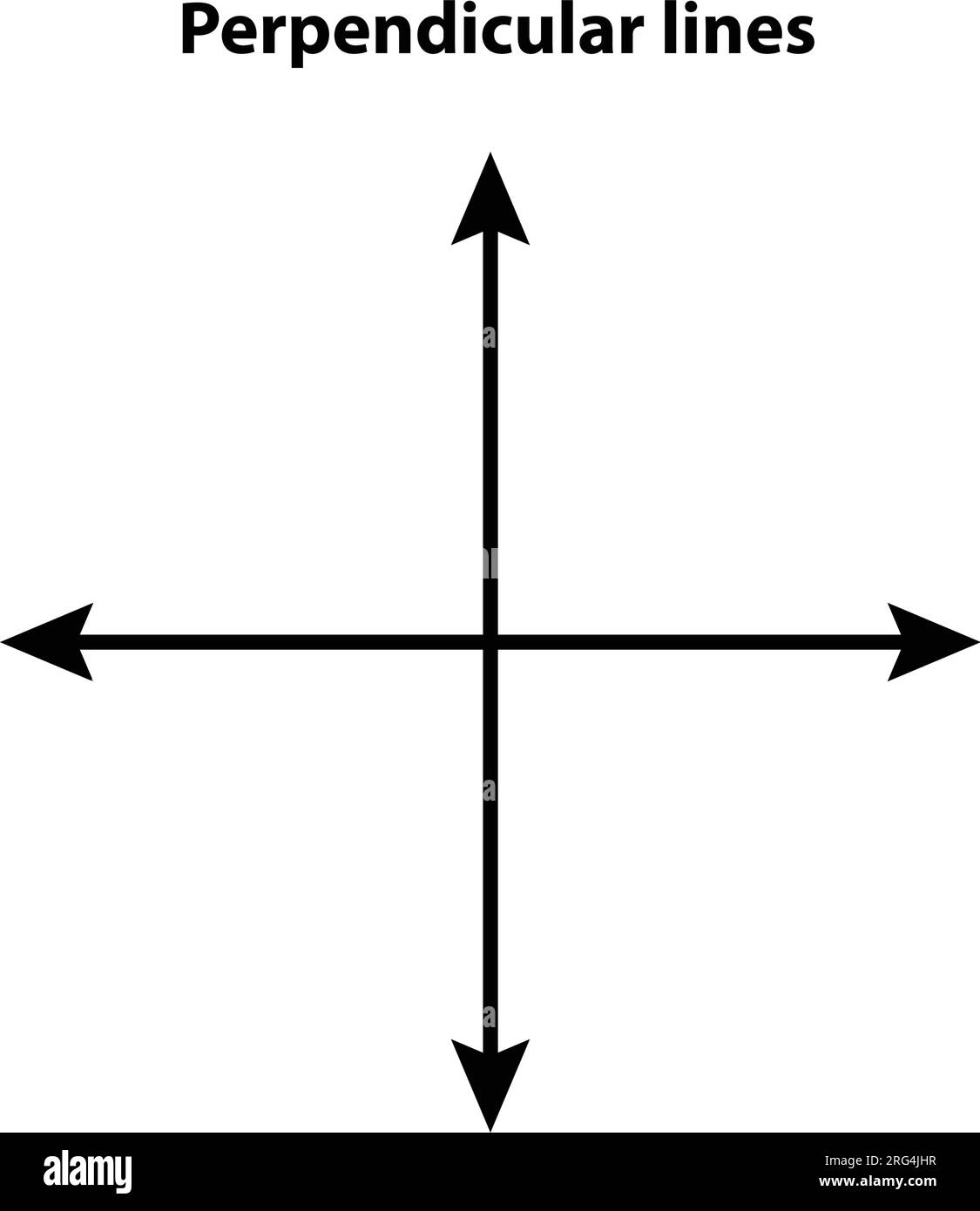
Perpendicular relationships also appear when bisecting finite line segments. A perpendicular bisector cuts an existing segment into two equal halves at an exact right angle. Finding its equation requires combining the midpoint formula with the negative reciprocal gradient.
Suppose a segment connects point $J(-2, 5)$ and point $K(4, 1)$.
First, locate the midpoint $M$:
$$M = \left( \frac{x1 + x2}{2}, \frac{y1 + y2}{2} \right) = \left( \frac{-2 + 4}{2}, \frac{5 + 1}{2} \right) = (1, 3)$$
Next, find the slope of segment $JK$:
$$m{JK} = \frac{y2 - y1}{x2 - x_1} = \frac{1 - 5}{4 - (-2)} = \frac{-4}{6} = -\frac{2}{3}$$
Now, compute the perpendicular slope:
$$m_{\perp} = -\frac{1}{-2/3} = \frac{3}{2}$$
Finally, build the linear equation through midpoint $(1, 3)$ using point-slope form:
$$y - 3 = \frac{3}{2}(x - 1)$$
$$y = \frac{3}{2}x - \frac{3}{2} + \frac{6}{2}$$
$$y = \frac{3}{2}x + \frac{3}{2}$$
Every coordinate sitting along this line is equidistant from point $J$ and point $K$. This property forms the operational basis of Voronoi diagrams, which route navigation systems and map territory across modern spatial software.
Sarah Jenkins is a veteran tech journalist with over 12 years of experience covering artificial intelligence, mobile innovations, and digital ethics. Her insights have appeared in leading technology publications worldwide.
