From Manga Panel to Global Phenomenon: the Timeline of Death Note's Viral Snack Moment
 By Robert Thorne
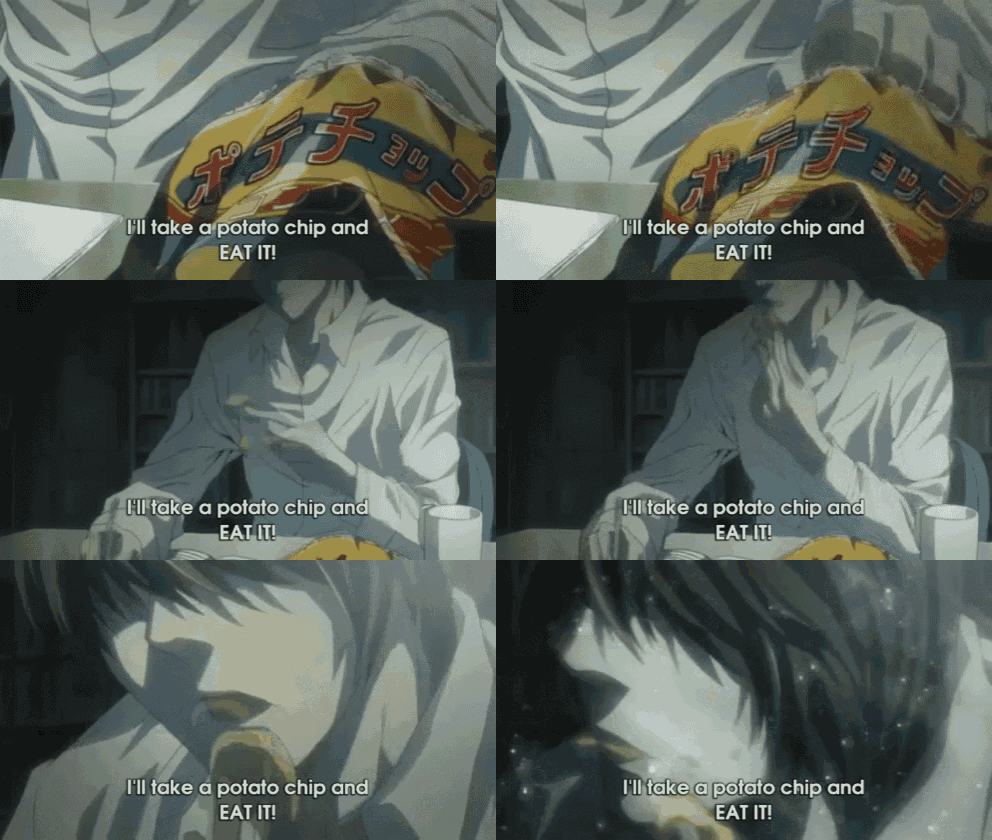
On paper, Tsugumi Ohba designed the scene as an intellectual brain-teaser demonstrating Light's cold cunning. When studio Madhouse adapted the manga into an anime series in 2006, director Tetsuro Araki altered the presentation entirely. Araki, who later directed Attack on Titan, approached Light’s internal monologue not as quiet contemplation, but as an apocalyptic religious opera.
Araki utilized rapid-fire Dutch angles, spinning 360-degree camera orbits, and saturated amber color palettes. The mechanical pencil scratches across the exam sheet like an executioner’s axe, rendered with explosive kinetic sound design. Behind the visuals, composers Yoshihisa Hirano and Hideki Taniuchi dropped roaring Gregorian chants and heavy orchestral brass, treating a teenager eating junk food with the sonic weight of the fall of Rome.
| Release Era | Medium & Creative Lead | Tonal Presentation | Cultural Reception |
|---|---|---|---|
| 2004 (Chapter 19) | Manga (Ohba & Obata) | Tactical mystery; procedural deduction | Praised for airtight mechanical logic |
| 2006 (Episode 8) | Anime (Dir. Tetsuro Araki) | Gothic melodrama; symphonic choir score | Instant viral sensation in early web video |
| 2007, 2008 | Ocean English Dub (Brad Swaile) | Theatrical voice acting; exaggerated gravitas | Cemented phrase as an iconic English anime quote |
| 2017 | Netflix Live-Action (Dir. Adam Wingard) | Omitted entirely; grounded teen slasher tone | Widely criticized by fans for ignoring source camp |
| 2024, 2026 | Global Web Ecosystem | Ubiquitous audio-sync format on modern platforms | Perennial meme template for mundane overreactions |
The contrast between the banality of a potato chip and the apocalyptic presentation created an unintended emotional resonance. Viewers were not merely watching a battle of wits; they were experiencing a stylistic explosion that celebrated its own absurdity without ever breaking character.
Robert Thorne covers electric vehicle innovations, autonomous driving systems, global mobility trends, and automotive engineering developments.
