From High School Chemistry to Modern Labs: the Complete Evolution of the Mole Concept
 By Maya Lin-Takahashi
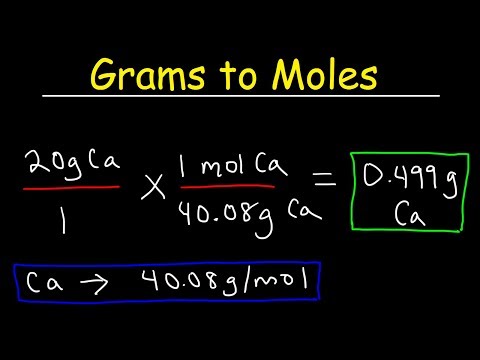
Q1: What is the fastest formula to convert grams to moles?
A1: Divide mass in grams by molar mass in grams per mole: n = m / M. If you have 58.44 grams of table salt (NaCl) and its molar mass is 58.44 g/mol, you have exactly 1.00 mole.
Q2: Why can’t chemists use grams directly in chemical equations?
A2: Molecules react in discrete, whole-number integer ratios, not by weight. A single gold atom weighs far more than a single carbon atom. Counting molecules via moles ensures the correct stoichiometric pairing regardless of elemental weight differences.
Q3: How did the 2019 SI redefinition change daily mole calculations?
A3: It locked Avogadro's number permanently to 6.02214076 × 10²³ mol⁻¹. For general laboratory tasks, everyday conversion calculations remain identical, but baseline atomic values are now insulated from the physical degradation of physical artifacts.
Q4: How do you identify the molar mass of an unknown compound?
A4: Analytical facilities determine the molar mass of unfamiliar compounds using mass spectrometry, freezing point depression osmometry, or vapor density analysis before attempting stoichiometric mass calculations.
Maya is a hardware enthusiast who tests and reviews smart home devices, smartphones, wearables, and audio gear. She focuses on practical consumer value and build quality.
