Why Mixing Red and Green Doesn't Make What You Think: the Optical Science Mystery
 By Sarah Jenkins
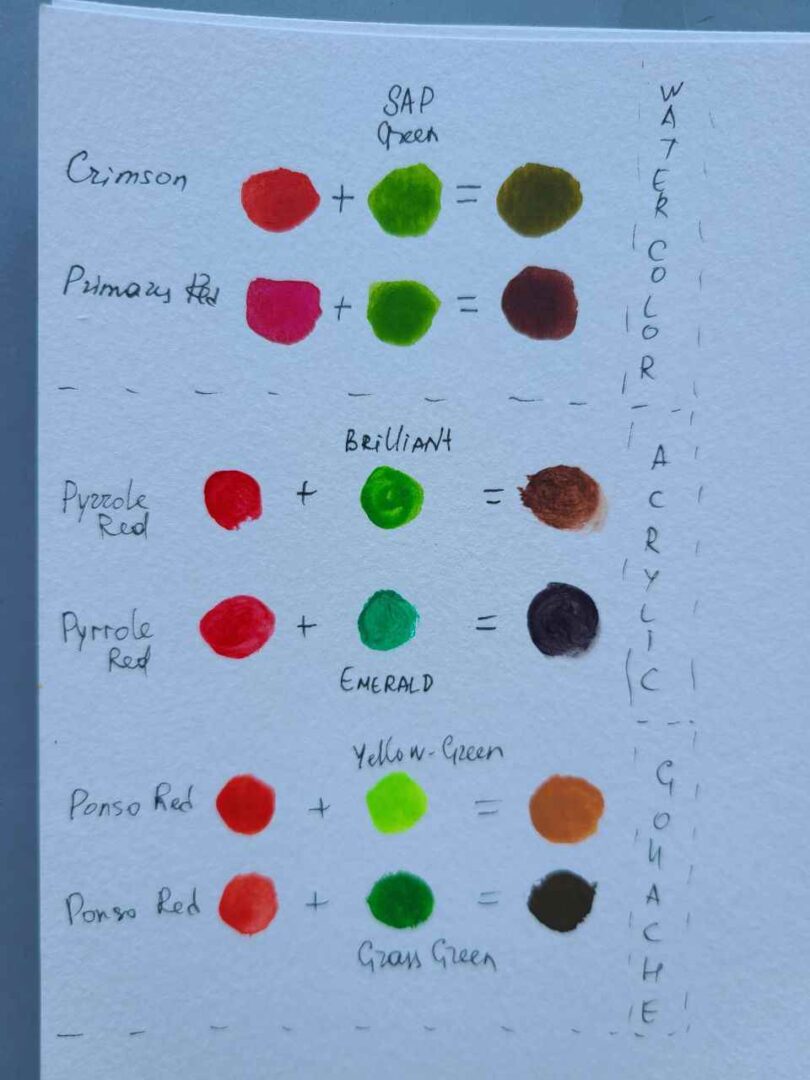
Color does not exist as an intrinsic physical object resting on a table. Color is an optical perception manufactured by the brain when electromagnetic radiation strikes the retina. When dealing with physical matter, every drop of wet paint relies on subtractive color theory. Pigment molecules contain chemical bonds engineered to absorb specific bands of the visible light spectrum while scattering whatever remains back toward the viewer.
A tube of crimson paint looks red because its chemical compounds soak up blue, cyan, and green wavelengths, reflecting light primarily between 620 and 750 nanometers. A swatch of emerald paint appears green because it consumes red, orange, and violet wavelengths, reflecting bands clustered between 495 and 570 nanometers. When an artist mashes these two pigments together on a palette, their chemical absorption bands do not vanish. They compound.
The red pigment absorbs the green light. The green pigment absorbs the red light. With both primary pathways blocked, the remaining mixture absorbs virtually every wavelength attempting to bounce back to your eye. The reflected bounce drops to a fraction of its original luminance, producing muddy brown hues or dull dark grays rather than vibrant warmth.
Sarah Jenkins is a veteran tech journalist with over 12 years of experience covering artificial intelligence, mobile innovations, and digital ethics. Her insights have appeared in leading technology publications worldwide.
