From Ancient Dynasty Banquets to Lunar New Year Phenomenon: the Dragon's Beard Resurgence
 By Sarah Jenkins
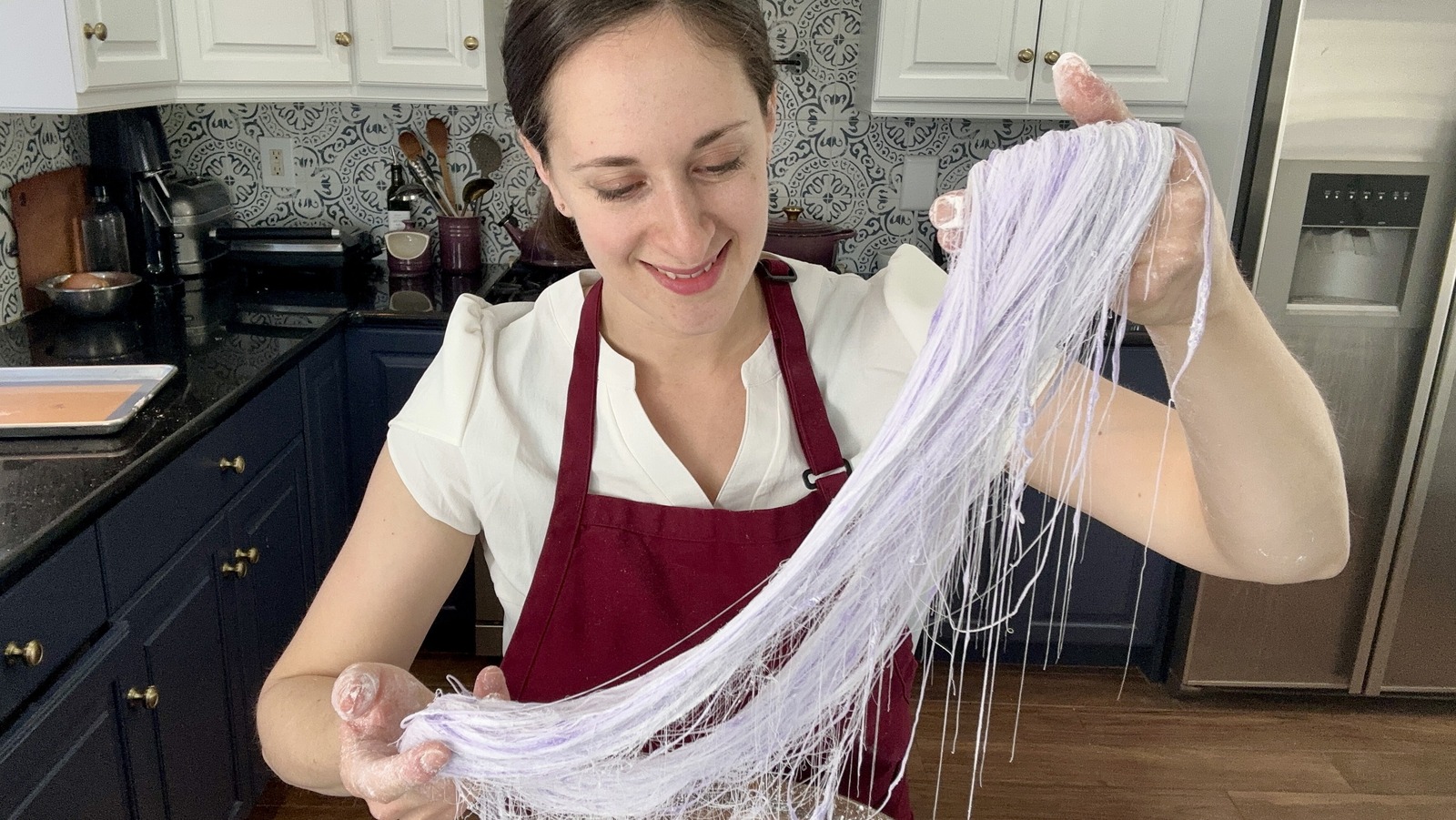
The origins of dragon's beard candy stretch back over two millennia to the Han dynasty. Imperial chefs created the sweet to amuse emperors who demanded dishes that demonstrated culinary impossibility. The confection took its name directly from mythological iconography: the emperor was symbolized by the dragon, and the billowing, snow-white mass of pulled sugar resembled the whiskers of the imperial beast.
The process demanded absolute physical mastery. Working over charcoal braziers, palace confectioners boiled a mixture of maltose syrup and sugarcane juice until it reached an exact, viscous hard-ball stage. Once cooled into a pliable golden disc, the master poked a hole through the center, forming a thick donut. From that moment, the hands never stopped moving.
Using a steady, continuous pulling motion, the artisan stretched the loop, twisted it into a figure-eight, folded it back over itself, and dredged it through toasted wheat flour or starch to prevent the strands from fusing. With each fold, the number of strands doubled exponentially. One loop became two, two became four, four became eight. By the fourteenth pull, the single disc had fractured into precisely 16,384 micro-filaments, so fine that breathing directly onto them could scatter the fibers like spider silk.
Sarah Jenkins is a veteran tech journalist with over 12 years of experience covering artificial intelligence, mobile innovations, and digital ethics. Her insights have appeared in leading technology publications worldwide.
