Fact-Checking 'Nah, I'd Win': Translation Nuances, Author Intent, and the Viral Misdirection
 By Chloe Bennett
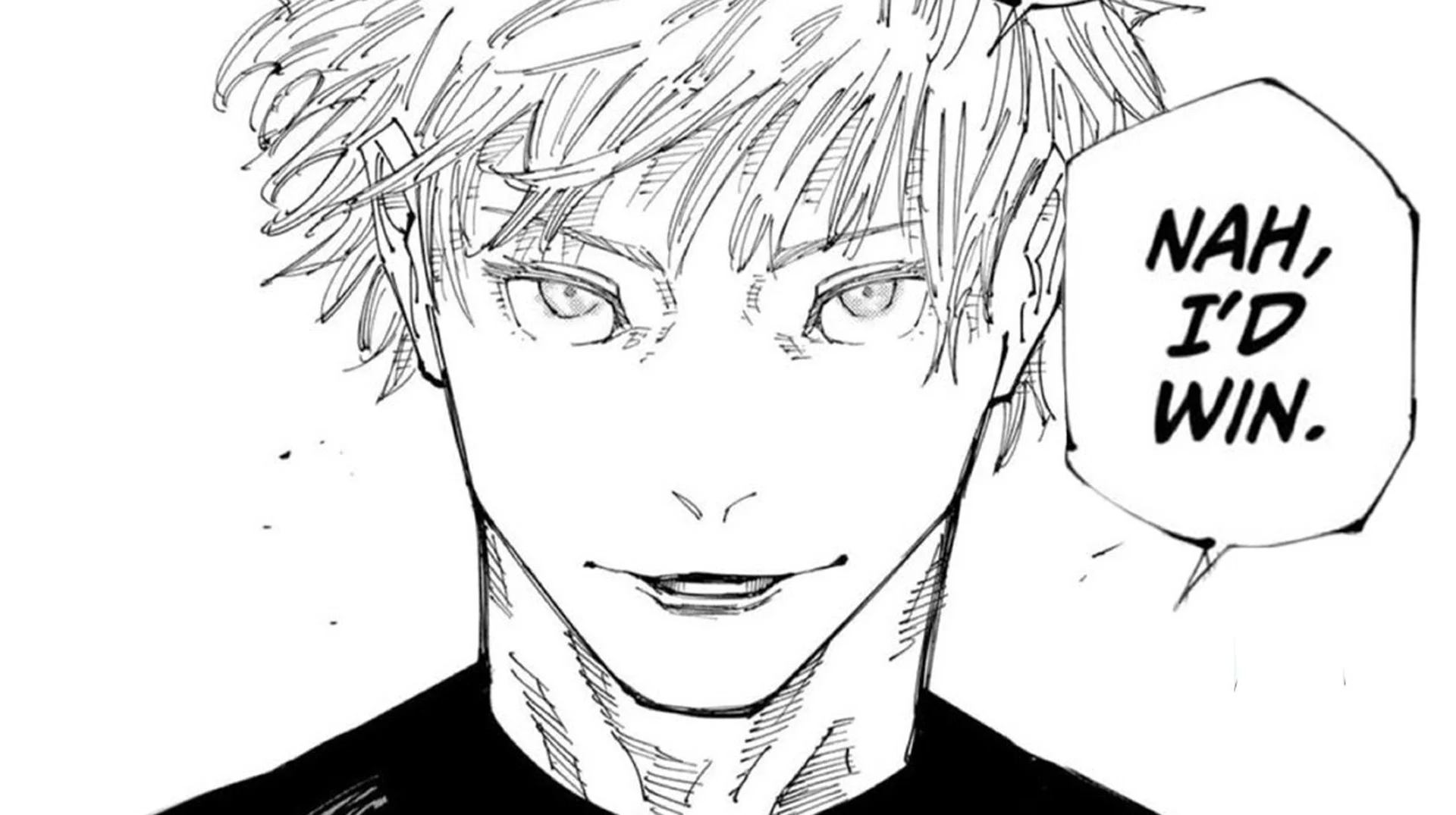
Understanding the weight of Gojo's boast requires stepping back to the earliest chapters of Jujutsu Kaisen. In Chapter 3, protagonist Yuji Itadori asked Gojo point-blank whether he could handle Sukuna if the ancient curse regained all twenty of his fingers. Gojo answered with cool certainty: "It might be a little tough... but I'd win." In Japanese, Akutami scripted Gojo using the phrase 勝つさ (Katsu sa). The sentence-ending particle sa imparted a breezy, matter-of-fact assurance. Winning was not a desperate hope; it was treated as an immutable law of physics.
When Akutami staged Gojo's return in Chapter 221 (April 2023), the author intentionally mirrored that exact exchange. Stepping onto the battlefield to launch the Shinjuku Showdown arc, Gojo faced the merged threat of Kenjaku and Sukuna inhabiting Megumi Fushiguro's body. Kenjaku invoked Gojo's earlier claim, questioning if he still believed victory was guaranteed. Gojo paused, looked back over his shoulder, and delivered the same sentence: "Katsu sa."
The panel closed the chapter on a massive cliffhanger. It promised an epic clash of titans while reminding readers of Gojo's unshakeable identity. He was the strongest sorcerer alive, untethered by doubt.
Chloe Bennett explores the intersection of pop culture, streaming entertainment, digital trends, and contemporary lifestyle. Her weekly commentary reaches thousands of culture enthusiasts.
