Fact-Checking Hand Anatomy: Are There 27 Bones, or Do Sesamoids Change the Count?
 By Sophia Al-Mansoor
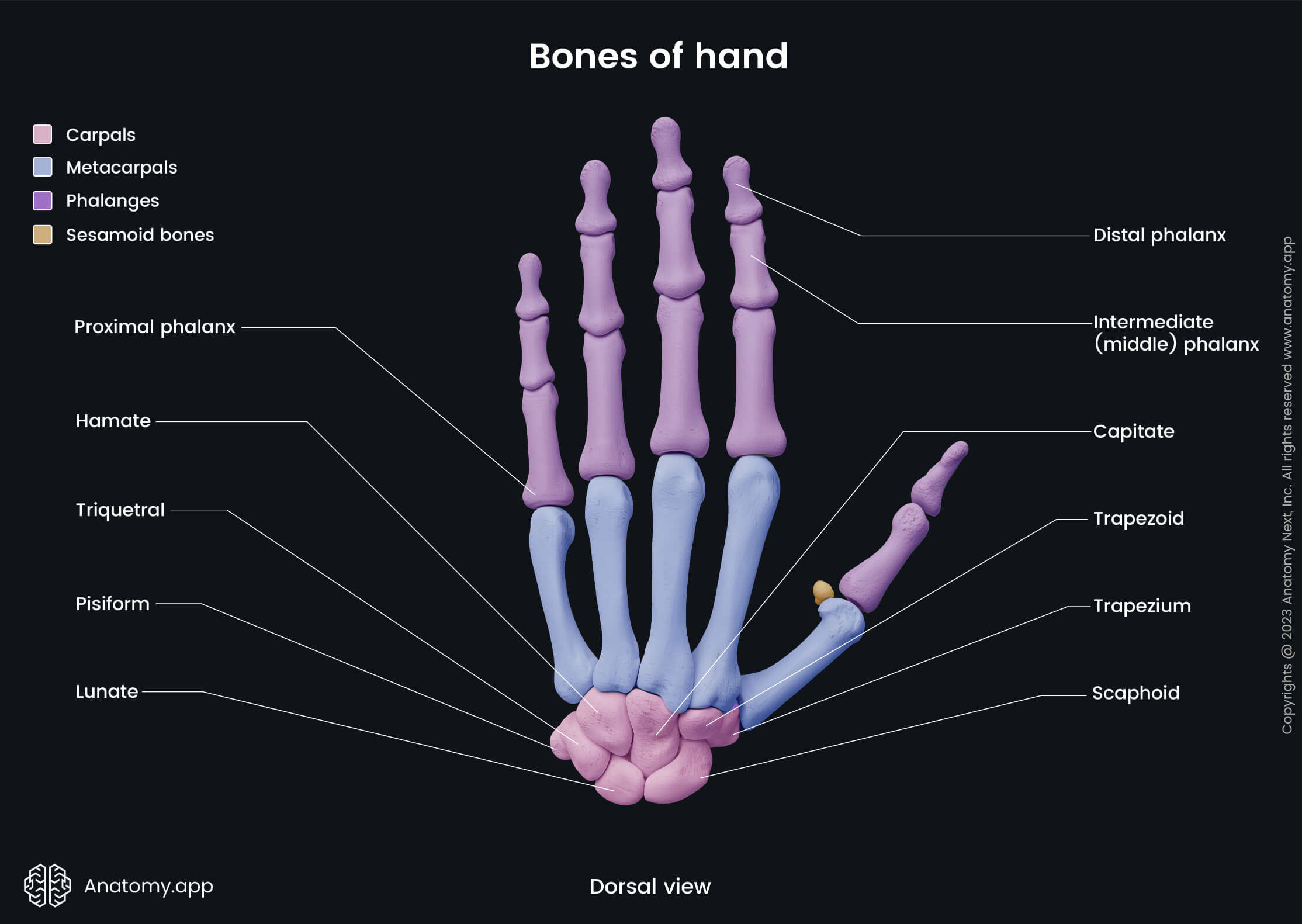
To an emergency physician or orthopedic surgeon, whether the hand contains 27 or 29 bones is never an academic argument. It dictates how clinical teams read trauma radiographs and plan reconstructive surgery.
When patients present with acute hand trauma after a high-impact fall or sports collision, uncounted sesamoid bones often mimic fracture fragments. An inexperienced clinician viewing an X-ray might mistake a bipartition of a thumb sesamoid or an accessory ossicle (such as the os styloideum) for an acute avulsion fracture. Ordering unnecessary immobilization or invasive interventions costs time and money. Knowing that hand bone counts vary naturally prevents misdiagnoses.
Furthermore, developmental ossification patterns in the hand provide forensic pathologists and pediatricians with an objective calendar of biological age. A newborn baby has no ossified carpal bones visible on an X-ray; their wrist consists almost entirely of radiolucent cartilage models. The capitate begins ossifying around 3 to 4 months of age, followed by the hamate, with the pisiform finally calcifying between ages 9 and 12. By age 18, all 27 structural bones fuse completely. Deviations in this skeletal progression reveal endocrine disorders, chronic malnutrition, and pediatric growth arrests.
Sophia analyzes international trade, startup ecosystems, retail transformation, and supply chain logistics for modern digital publications.
