Fact-Checking Gut Immunity: Do Peyer’s Patches Do More Than Capture Pathogens?
 By Alexander Ross
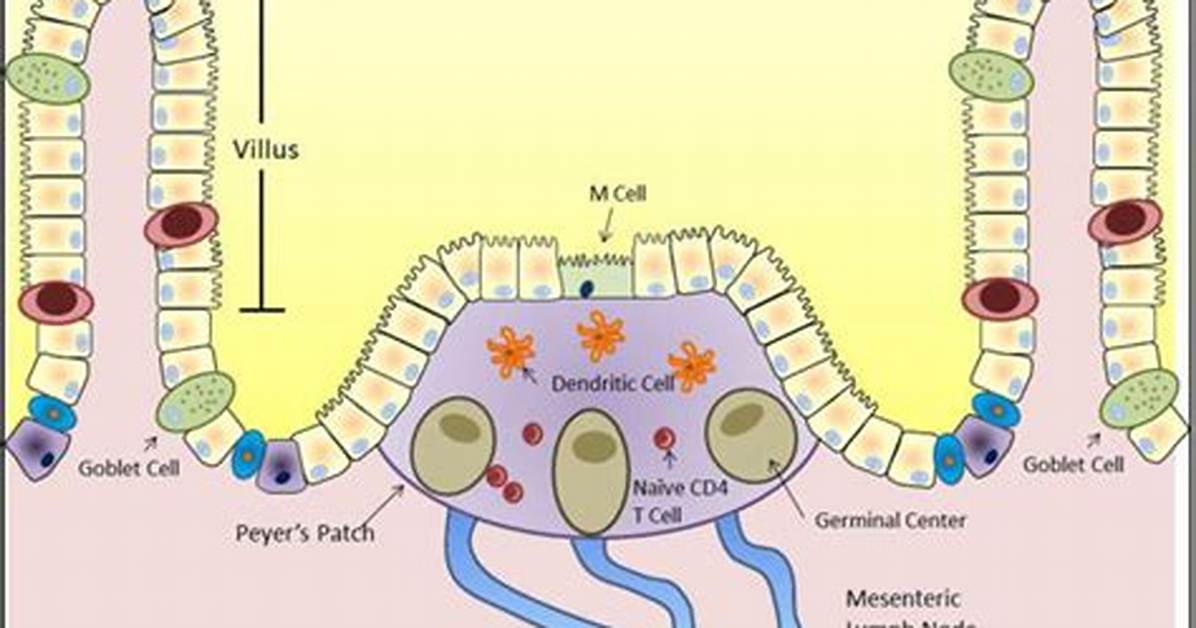
The human ileum faces an immense engineering problem every hour. It must absorb vital nutrients while keeping trillions of commensal bacteria and opportunistic invaders from penetrating the sterile bloodstream. Peyer’s patches sit directly on this front line as the primary functional centers of gut-associated lymphoid tissue (GALT). Instead of sitting behind the thick, double-layered mucus blanket that shields ordinary intestinal villi, these patches are covered by a specialized follicle-associated epithelium (FAE).
This anatomical concession comes with real risk. By thinning the protective mucus layer over lymphoid follicles, the enteric immune system creates a controlled point of contact with the luminal environment. Specialized epithelial gateways known as microfold cells (M cells) bridge the gap. These cells lack typical apical microvilli and dense enzymatic coats, featuring instead an invaginated basolateral "pocket" packed with naïve dendritic cells, T cells, and B lymphocytes.
M cells ingest intact antigens directly from the intestinal lumen via transcytosis, shuttling foreign proteins, whole bacteria, and viral particles straight across the ileum mucosal barrier. Once across, this cargo lands directly in front of waiting antigen-presenting cells. Rather than waiting for pathogens to break down the gut wall, Peyer’s patches pull the environment directly into their interior to inspect it under controlled conditions.
LUMINAL SPACE (Microbiota, Dietary Antigens, Pathogens)
-----------------------------------------------------------------
[ Enterocyte ] [ M Cell ] [ Enterocyte ]
│ (Antigen Transcytosis)
▼
[ Basolateral Pocket ]
Dendritic Cells / Macrophages
│
▼
[ Subepithelial Dome (SED) ]
│
┌───────────────────┴───────────────────┐
▼ ▼
[ Germinal Center ] [ Interfollicular T-Cell Zone ]
B-Cell Receptor Maturation Naïve Lymphocyte Trafficking
& Secretory IgA Class-Switching & Regulatory T-Cell Priming
│ │
▼ ▼
Systemic/Mucosal Circulation Oral Tolerance to Proteins
via Efferent Lymphatics Systemic Anergy Induction
Alexander Ross has covered the video game industry for a decade, writing deep dives on game design, esports tournaments, VR developments, and gaming culture.
