Dead Whale Washes Ashore at Lovers Point: Photos and Marine Safety Response
 By James H. Sterling
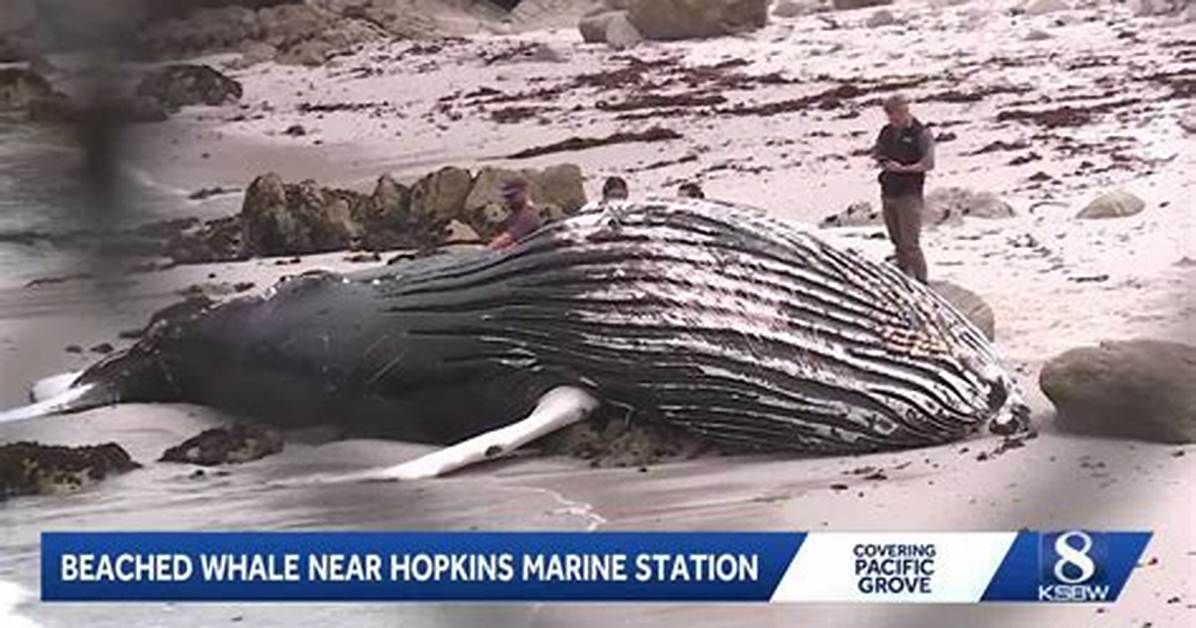
The primary concern during any large cetacean stranding is the rapid introduction of organic material into nearshore waters. As whale oil and biological fluids enter the surf zone, they create a potent scent slick that attracts white sharks and other apex marine predators from offshore feeding grounds. Monterey Bay marine safety protocols dictate that whenever a fresh carcass washes ashore in populated recreational waters, all ocean entry must cease immediately.
Lifeguard units posted bright red advisory warnings across Lovers Point Beach, directing swimmers, boarders, and paddlers to stay completely clear of the water. Swimmers who regularly train at the cove were redirected to inland municipal pools or distant northern beaches. Police officials warned that white sharks frequently investigate stranded carcasses within 12 to 36 hours of shoreline grounding, turning shallow surf breaks into high-risk zones for anyone in the water.
James Sterling reports on renewable energy developments, climate policy, ecological conservation, and green tech innovations around the globe.
